 Pin It
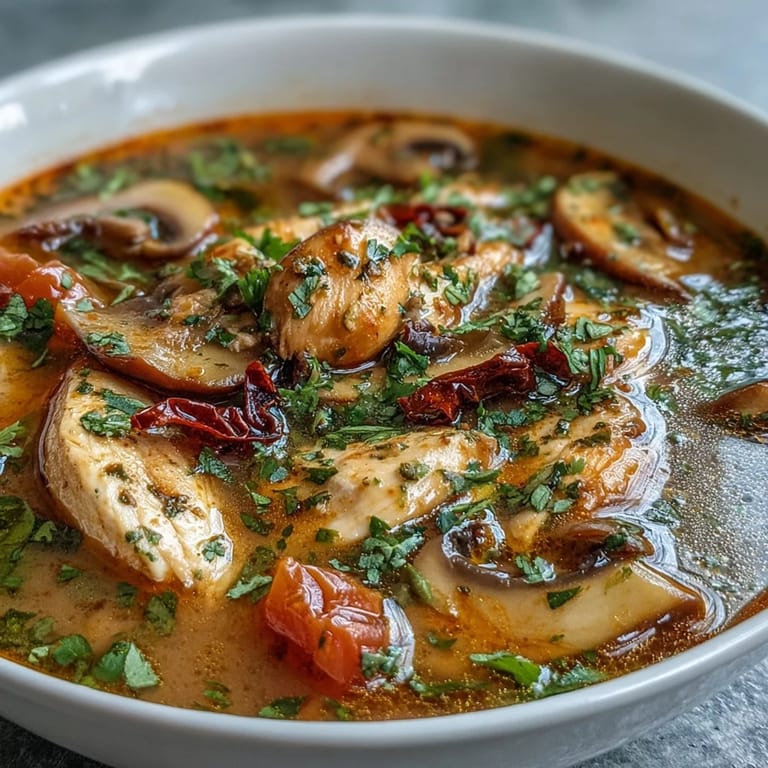
 The first time I made Tom Yum Gai, my kitchen windows fogged with aromatic steam that transported me straight to the streets of Bangkok. I'd been chasing that perfect balance of sour, spicy, and savory ever since a backpacking trip through Thailand where I'd huddle over steaming bowls in tiny street stalls during unexpected rainstorms. The fragrance of lemongrass and lime leaves still reminds me of those moments, rain pattering on tin roofs while I spooned up comfort in liquid form.
Last winter when my friend Sarah was battling a stubborn cold, I brought over a container of this soup and watched her eyes widen at the first spoonful. The chile heat cleared her sinuses immediately, and she laughed through watery eyes, asking for the recipe between sips. Three days later she texted me that she was making it again, now fully recovered and simply craving those intense flavors.
Ingredients
- Lemongrass: Look for firm stalks that feel heavy for their size, and always remove the tough outer layers before smashing to release those citrusy oils.
- Nam Prik Pao: This roasted chile paste is the secret weapon that gives authentic depth to the broth, I've found it in Asian markets or international aisles but you can substitute with a mixture of chile paste and a touch of tamarind if needed.
- Kaffir Lime Leaves: These aromatic leaves keep in the freezer for months, so I buy them whenever I spot them and store them for soup emergencies.
- Chicken: Thighs work better than breast here as they stay tender even with longer simmering, but either will create a delicious result.
- Galangal: Its floral peppery notes are distinctive, but fresh ginger can substitute in a pinch though the flavor profile will shift slightly.
Tired of Takeout? 🥡
Get 10 meals you can make faster than delivery arrives. Seriously.
One email. No spam. Unsubscribe anytime.
Instructions
- Infuse the broth:
- Bring your chicken stock to a gentle bubble, not a rolling boil, before adding the lemongrass, lime leaves, galangal and smashed chiles. The slow simmer lets these aromatics release their essence without turning bitter.
- Cook the protein:
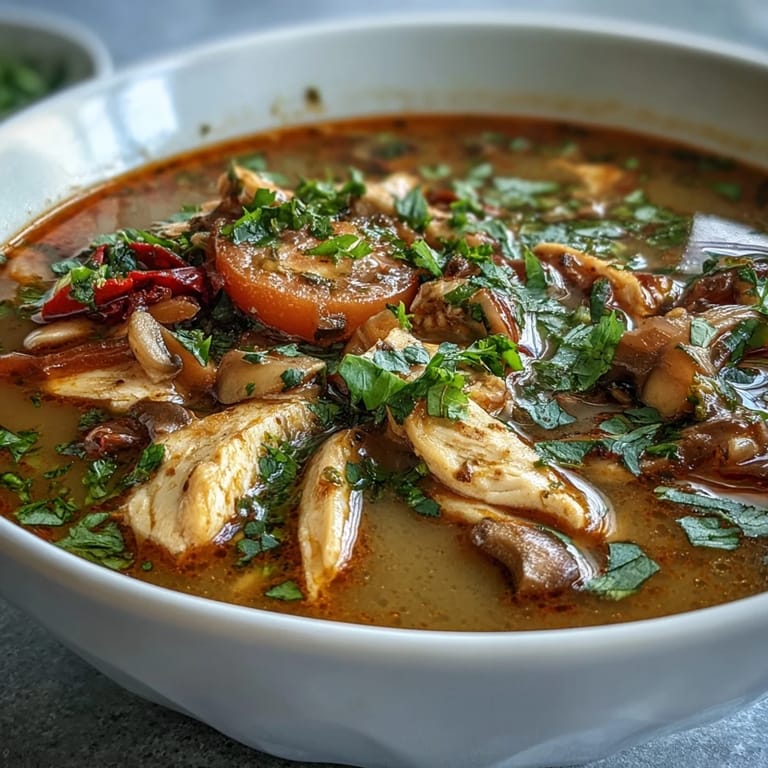
- Add your thinly sliced chicken and watch carefully as it turns from pink to just opaque. Overcooked chicken becomes tough, so I always set a timer for exactly 4 minutes.
- Add the vegetables:
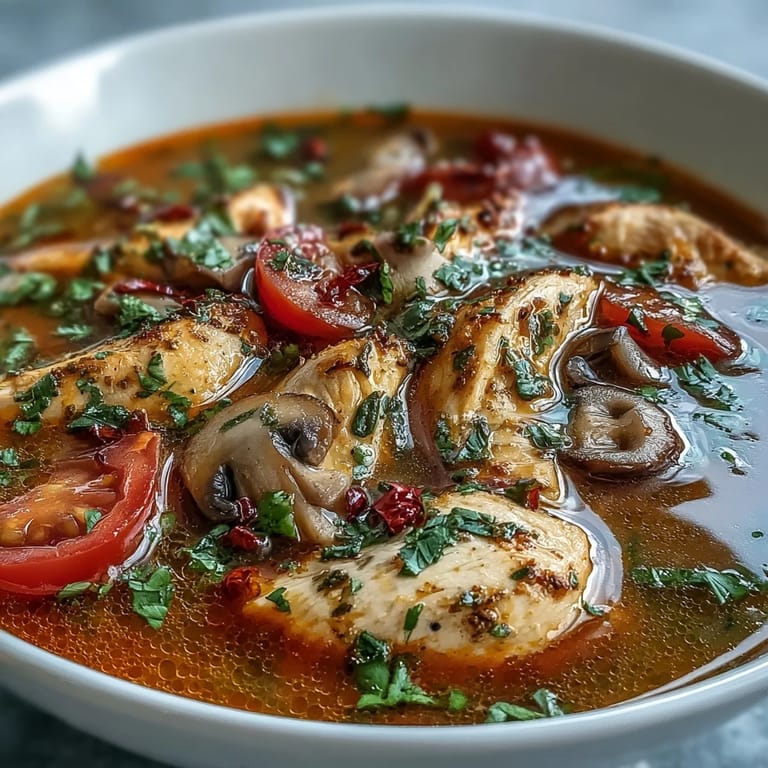
- The mushrooms will drink up the flavored broth while the tomatoes add a subtle sweetness and acidity. Keep the vegetables slightly firm for textural contrast with the tender chicken.
- Balance the flavors:
- This is where the magic happens as you layer in the nam prik pao, fish sauce, and sugar. I always taste after each addition, adjusting until the umami, salt, and sweetness feel harmonious.
- Finish with brightness:
- Never add lime juice until the very end and off the heat, or the bright citrus notes will dull and turn slightly bitter. This final splash of acid brings everything into perfect balance.
 Pin It
 My kitchen becomes a gathering place whenever Tom Yum is on the menu, with friends lingering around the pot, waiting for the moment I declare it ready. Once, during a power outage, we sat around my gas stove by candlelight, passing steaming bowls between us, the spicy broth warming us from within as we shared stories late into the night, the usual distractions of modern life temporarily suspended in that fragrant steam.
Making It Your Own
This soup welcomes adaptation based on what you have available. When I cant find galangal, I substitute ginger and add an extra kaffir lime leaf to maintain that floral complexity. For vegetarian friends, I swap the chicken for firm tofu cubes and vegetable broth, adding a splash of soy sauce to replace the umami from fish sauce. The soul of Tom Yum lies in its aromatic foundation, so as long as you honor the lemongrass, lime, and chile trinity, your variations will still capture its essence.
Serving Suggestions
While Tom Yum stands beautifully on its own, I love serving it alongside a small bowl of jasmine rice to occasionally spoon into the broth, tempering the intensity. For a complete meal, pair with fresh spring rolls or a simple cucumber salad dressed with rice vinegar and a touch of the same fish sauce used in the soup. My Thai friend taught me to keep additional lime wedges, chile slices, and a small dish of fish sauce with sliced chilies on the table, allowing everyone to adjust their bowl to personal preference throughout the meal.
Storage and Leftovers
The flavors in Tom Yum Gai actually deepen overnight as the aromatics continue to infuse the broth, making it perhaps even more delicious the next day. I store leftovers in glass containers rather than plastic to prevent the strong flavors from absorbing into the container itself, a lesson learned after ruining a favorite plastic container with lingering lemongrass essence that never quite washed away.
- Refrigerate cooled soup within two hours of cooking and consume within three days for optimal flavor and freshness.
- When reheating, bring to just below a simmer rather than a full boil to preserve the bright lime notes.
- Consider adding fresh herbs and a new squeeze of lime to revitalize yesterday soup into today feast.
 Pin It
 Every spoonful of Tom Yum tells the story of a cuisine that understands the delicate dance between contrasting flavors. As you master this recipe, youll find yourself instinctively knowing when the broth needs an extra squeeze of lime or dash of fish sauce, developing the confidence that comes from cooking not just with ingredients, but with all your senses.
Recipe FAQs
- → What makes Tom Yum Gai different from other Thai soups?
Tom Yum Gai features the signature spicy-sour flavor profile from fresh lime juice and chiles, combined with aromatic herbs like lemongrass, galangal, and kaffir lime leaves. The addition of nam prik pao (roasted chili paste) gives it a deeper, more complex flavor compared to clear broth soups.
- → Can I make this soup less spicy?
Yes, reduce the number of Thai birds eye chiles or remove them entirely after the broth infusion. You can also omit the optional garnish chiles. The soup will still be flavorful thanks to the aromatics and seasonings.
- → What can I substitute for galangal?
Fresh ginger makes a decent substitute for galangal, though it has a slightly different flavor profile. Use the same amount of ginger slices as you would galangal. The piney, citrusy notes of galangal are unique, but ginger will still provide aromatic warmth.
- → Is nam prik pao essential for this dish?
While nam prik pao adds authentic depth and richness, you can make a simplified version without it. Increase the fish sauce slightly and add a touch more sugar or a small amount of chili garlic sauce as an alternative.
- → How do I store and reheat leftovers?
Store cooled soup in an airtight container in the refrigerator for up to 3 days. Reheat gently over medium-low heat, being careful not to boil vigorously as this can toughen the chicken. Add fresh lime juice before serving to restore the bright sour flavor.
- → Can I use other proteins besides chicken?
Absolutely. Shrimp makes Tom Yum Goong, a popular variation. Tofu works well for a vegetarian option. Adjust cooking time accordingly—shrimp needs only 2-3 minutes, while tofu can be added with the vegetables.