 Pin It
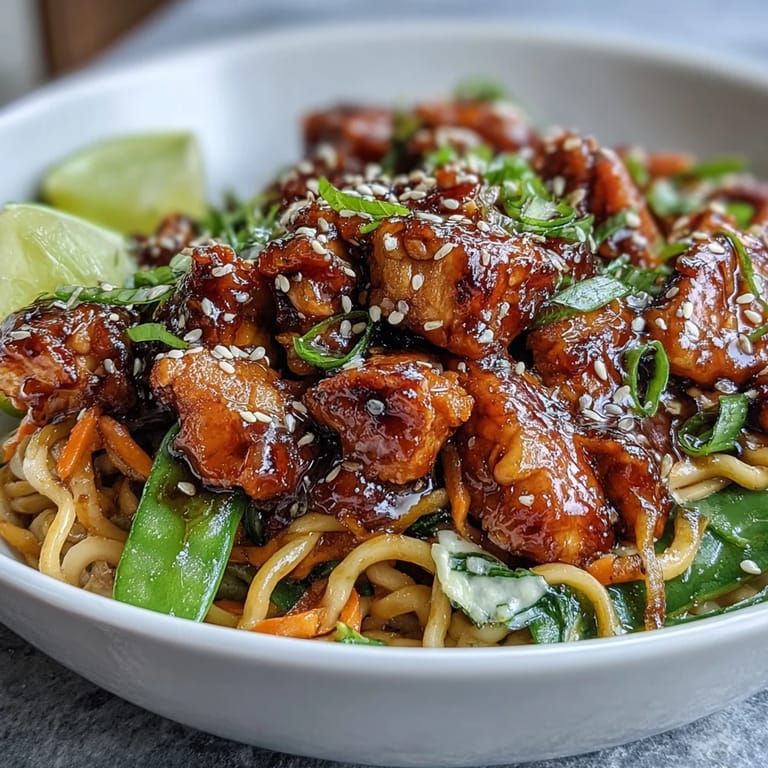
 There's something about the smell of sesame oil hitting a hot pan that instantly transports you somewhere warm and welcoming. I discovered this bowl on a Tuesday night when I had exactly chicken, noodles, and vegetables in the fridge, nothing fancy, but something told me to whisk together what I had into a sauce. The result was so unexpectedly good that it became the recipe I make when I want to feel like I'm ordering takeout but actually know exactly what's going into my bowl.
I made this for my roommate after she'd had a rough week, and watching her face light up when she took that first bite was the kind of small kitchen victory that stays with you. She asked for the recipe immediately, which is the highest compliment you can give someone's cooking.
Ingredients
- Boneless, skinless chicken breast or thighs (500 g): Thighs stay more tender if you're nervous about overcooking, but either works beautifully when sliced thin.
- Dried udon, soba, or rice noodles (250 g): Choose based on what you love or what you have; the sauce loves all of them equally.
- Red bell pepper (1): The sweetness balances the savory sauce and adds a bright color that makes the bowl feel alive.
- Carrot (1 medium): Julienning it fine means it cooks in minutes and tucks perfectly around the noodles.
- Sugar snap peas (100 g): These stay crisp even with quick cooking, giving you that satisfying crunch in every bite.
- Spring onions (2): Added at the very end so they keep their fresh bite and mild onion flavor.
- Low-sodium soy sauce (60 ml): The backbone of your sauce, but go low-sodium so you control the saltiness.
- Brown sugar (2 tbsp): This creates that sweet-savory balance that makes the whole dish come together.
- Toasted sesame oil (1 tbsp): Use a light hand here because this oil is potent in the best way; it's what makes people ask if you added some secret ingredient.
- Rice vinegar (1 tbsp): Adds brightness without being harsh, cutting through the richness of the sauce.
- Fresh ginger (2 tsp, grated): Freshly grated ginger has this warm, almost spicy quality that bottled versions can't match.
- Garlic (2 cloves, minced): Mince it fine so it disappears into the sauce and flavors every bite.
- Cornstarch (1 tsp, optional): Skip it if you like a thinner sauce, or use it if you prefer everything glossy and clinging to the noodles.
- Toasted sesame seeds (2 tbsp): These aren't just garnish—they add a nutty depth that ties everything together.
- Fresh coriander or cilantro: The herbaceous finish that makes you feel like you've ordered from somewhere special.
- Lime wedges (optional): A squeeze of lime right before eating brightens everything in the best way.
Tired of Takeout? 🥡
Get 10 meals you can make faster than delivery arrives. Seriously.
One email. No spam. Unsubscribe anytime.
Instructions
- Start your noodles first:
- Get water boiling and cook the noodles according to the package, then drain and rinse them under cold water so they don't stick together. Set them aside and take a breath—you're already ahead.
- Build your sauce while everything else waits:
- Whisk soy sauce, brown sugar, sesame oil, rice vinegar, ginger, garlic, and cornstarch if using into a small bowl. The mixture should smell absolutely incredible and look glossy and rich.
- Get your pan hot and ready:
- Heat a large skillet or wok over medium-high heat and add just a splash of oil. You want it shimmering and almost smoking before the chicken goes in.
- Cook the chicken until golden:
- Lay the chicken slices in the hot pan and let them sit for a moment before stirring—this gives them a chance to brown. Cook for about 4 to 5 minutes until they're cooked through and starting to get color on the edges, then move them to a clean plate.
- Stir-fry your vegetables quickly:
- Add a tiny bit more oil to the same pan if it looks dry, then add your bell pepper, carrot, and snap peas. You're going for tender-crisp here, which usually takes 2 to 3 minutes of constant movement with your tongs.
- Bring everything back together:
- Return the chicken to the pan with the vegetables, pour in that sauce you made, and toss everything until it's all coated. The sauce will start to thicken slightly as it simmers for 1 to 2 minutes.
- Add noodles and spring onions:
- Toss in your cooked noodles and the sliced spring onions, making sure everything is heated through and evenly coated with that glossy sauce.
- Divide and garnish:
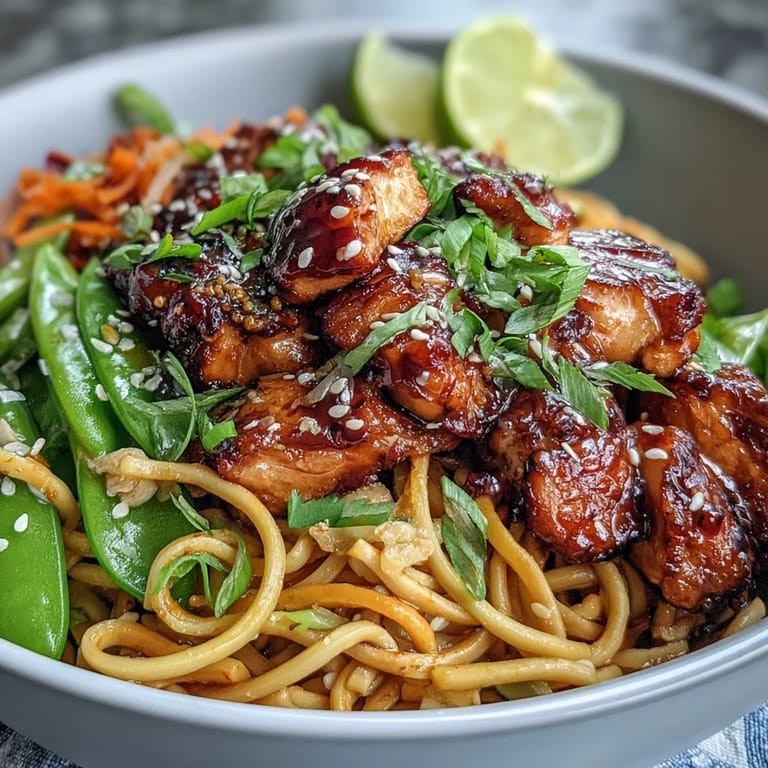
- Scoop into bowls and finish with sesame seeds, fresh coriander, and a lime wedge squeezed over the top if you want that final bright hit.
 Pin It
 There was this moment when I was making this for friends and someone said, mid-bite, that it tasted like their favorite restaurant, and suddenly I realized that home cooking doesn't have to be complicated to feel special. This bowl proves that sometimes the simplest combinations, when made with attention and care, become the meals people remember.
Why This Sauce Works Every Time
The magic is in the balance of three elements: the saltiness from soy sauce, the sweetness from brown sugar, and the warmth from sesame oil and ginger. When these four things meet, they create something greater than any single ingredient could accomplish alone. I've learned that if your sauce tastes too sweet, add a splash more vinegar, and if it's too salty, a pinch more sugar fixes it. This kind of adjusting as you go is how you make a recipe truly yours.
Making It Your Own
One of the beauties of this bowl is how flexible it is without losing its identity. I've made it with shredded cabbage when I didn't have bell peppers, stirred in a handful of broccoli florets because someone in the kitchen preferred them, and even swapped soba noodles for ramen when that's what I had. The sauce holds it all together, so the main dish stays delicious no matter what vegetables you choose. The chicken cooks quickly and stays tender if you slice it thin, so that part is pretty forgiving too.
Small Details That Make the Difference
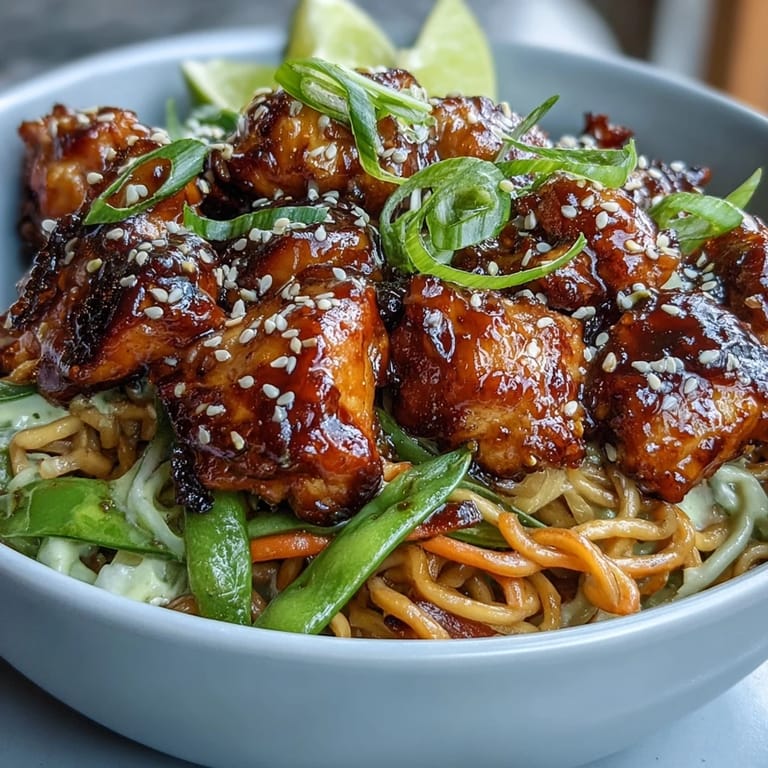
Toasting your own sesame seeds before sprinkling them on sounds fussy but takes literally two minutes in a dry pan and transforms them from pleasant to unforgettable. Fresh ginger tastes completely different from powdered, and since you only need a small amount, buying a knob of fresh is worth it for how much brighter it makes the sauce. Lime wedges at the table let people decide their own level of brightness, which feels more generous than deciding for them.
- Have all your ingredients prepped before you start cooking—mise en place might sound fancy but it's really just preventing panic.
- Use a wok if you have one, but a large skillet works just as well for getting everything cooked quickly and evenly.
- Leftovers actually get better as the sauce continues to flavor everything, so make extra without guilt.
 Pin It
 This bowl has become one of those recipes I return to again and again because it's reliable, delicious, and somehow always tastes like comfort. Make it once and it becomes yours.
Recipe FAQs
- → Can I make this dish gluten-free?
Yes, substitute regular soy sauce with tamari and choose gluten-free noodles like rice noodles. Always check labels to ensure all ingredients meet your dietary needs.
- → What other vegetables work well in this bowl?
Broccoli, mushrooms, baby corn, bok choy, or snow peas all complement the flavors beautifully. Feel free to use whatever crisp vegetables you have on hand.
- → Can I prepare the sauce ahead of time?
Absolutely. Whisk the sauce ingredients together and store in an airtight container in the refrigerator for up to 5 days. Give it a quick stir before using.
- → How do I store leftovers?
Store in an airtight container in the refrigerator for up to 3 days. Reheat gently in a skillet or microwave, adding a splash of water if the noodles seem dry.
- → Can I use other proteins besides chicken?
Yes, thinly sliced beef, shrimp, or tofu all work wonderfully. Adjust cooking time accordingly—shrimp cooks quickly, while beef may need a minute or two longer.
- → What type of noodles are best?
Udon, soba, and rice noodles all shine here. Choose based on preference—udon for chewiness, soba for nuttiness, or rice noodles for a lighter texture.