 Pin It
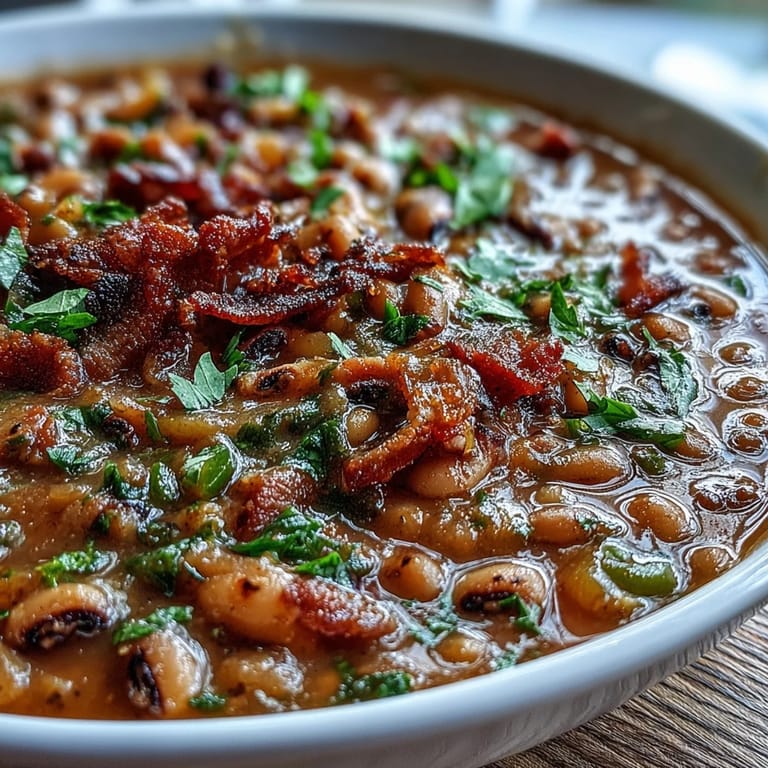
 My neighbor Mike showed up one January afternoon with a pot of black-eyed peas so good I nearly cried into my bowl. He wouldn't share the recipe at first, just smiled and said it was a Texas thing, something his grandmother made for luck on New Year's Day. When he finally relented weeks later, I realized the magic wasn't in any single ingredient but in how bacon fat turns humble dried peas into something silky and alive. Now I make this whenever the kitchen feels too quiet or when I need to feed a crowd without fussing.
I made this for my book club once and watched everyone go quiet mid-sentence the first time they tasted it. Nobody expected that little kick of heat mixed with the creamy softness of the peas, and suddenly everyone wanted the recipe printed out before they left. That pot somehow sparked the kind of conversation that makes you realize food does more than fill your stomach—it loosens tongues and brings people together.
Ingredients
- Dried black-eyed peas (1 pound): These little legumes are the backbone of the dish and deserve respect—rinsing and sorting removes dust and any hidden stones.
- Thick-cut bacon (8 ounces): The rendered fat is non-negotiable; it's what gives the whole pot its savory foundation.
- Yellow onion and jalapeños: They soften in that hot bacon fat and release their sweetness and gentle heat into every spoonful.
- Garlic (4 cloves): One minute in the pan is all it needs; any longer and it turns bitter.
- Rotel tomatoes (2 cans): Don't skip this or try to substitute—the green chilies add complexity that regular tomatoes can't match.
- Chicken broth and water (6 cups and 2 cups): This ratio keeps the peas creamy without turning them soupy.
- Chili powder, smoked paprika, and cumin: Together they build warmth and depth without overpowering the delicate pea flavor.
- Bay leaves: They whisper in the background, adding an herbal note that makes people ask what your secret is.
Tired of Takeout? 🥡
Get 10 meals you can make faster than delivery arrives. Seriously.
One email. No spam. Unsubscribe anytime.
Instructions
- Crisp the bacon until it shatters:
- You'll know it's ready when the edges curl and the kitchen smells like a breakfast worth waking up for. That rendered fat pooling at the bottom of the pot is liquid gold—don't drain it.
- Build flavor in the fat:
- The onion and jalapeños should sizzle and soften, releasing their natural sweetness. After 4-5 minutes they'll smell almost caramelized, which is exactly what you want.
- Toast the garlic briefly:
- Just 60 seconds is enough for it to bloom and become fragrant without turning dark or acrid.
- Combine everything and bring to a boil:
- Stirring ensures the spices distribute evenly and nothing sticks to the bottom. The liquid should come up over the peas by about an inch.
- Simmer low and slow:
- Cover and let time do the work—around 1 hour—stirring occasionally so nothing scorches. The peas will soften gradually, and the broth will begin taking on a warm, layered color.
- Finish uncovered for creaminess:
- Those last 20-30 minutes let excess liquid evaporate and the peas break down just enough to thicken the whole pot. You're looking for a stew-like consistency, not soup.
- Taste and season one final time:
- Remove the bay leaves and adjust salt to your preference—remember that bacon and Rotel already bring saltiness, so taste before adding more.
 Pin It
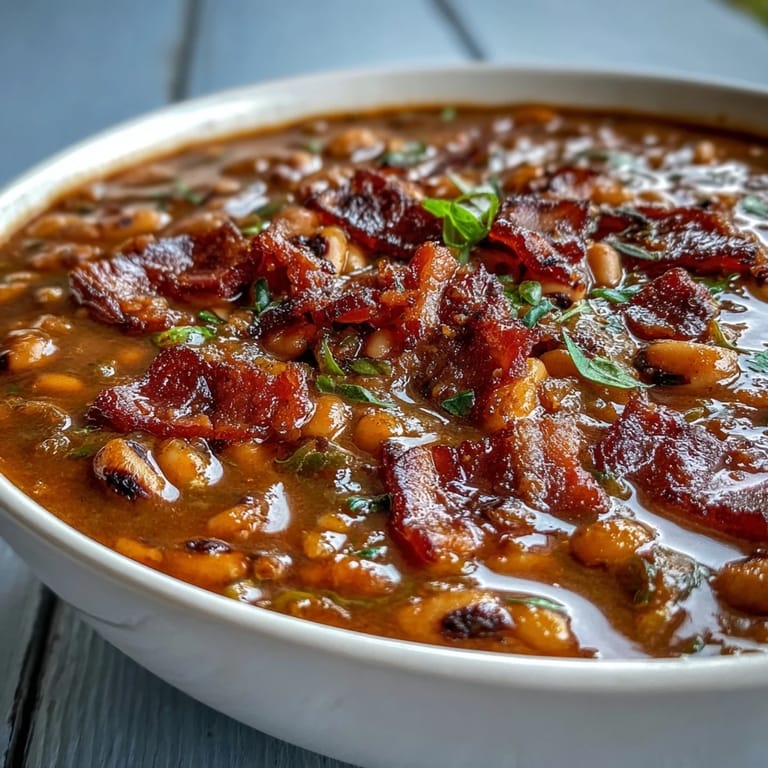
 Last winter my son came home sick from college, and I made this pot before he even unpacked his duffel. He ate three bowls that night and fell asleep on the couch looking more like himself than he had in months. Food has a quiet way of saying I love you without any words at all.
The Texas Touch
Rotel tomatoes aren't just a regional quirk—they're essential to the Texas version of this dish. The blend of diced tomatoes with green chilies adds a specific kind of heat and brightness that regular canned tomatoes can't deliver. Once you go down this road, you'll start spotting Rotel in every proper Texas kitchen, and you'll understand why it's worth seeking out.
Stretching It and Serving It Right
This pot naturally serves 8, but it scales beautifully if you're feeding more. The flavors don't dilute when you add extra broth and another can of Rotel. Serve it in wide bowls with cornbread on the side, or spoon it over white rice for something different—both feel authentically Southern and completely satisfying.
Making It Your Own
The base recipe is sturdy enough to handle your personal touches without falling apart. Some people add smoked sausage alongside the bacon, others sneak in a diced bell pepper, and I've seen versions that finish with a splash of hot sauce stirred in at the end. The cilantro and green onion garnish brighten everything, but honestly, a simple pat of butter melting into a bowl is its own kind of luxury.
- Leave some seeds in the jalapeños if you want genuine heat that builds slowly as you eat.
- Vegetarian versions work beautifully if you swap bacon for smoked paprika and use vegetable broth—nobody will miss the pork.
- Leftovers taste even better on day two or three, and they freeze well for up to three months.
 Pin It
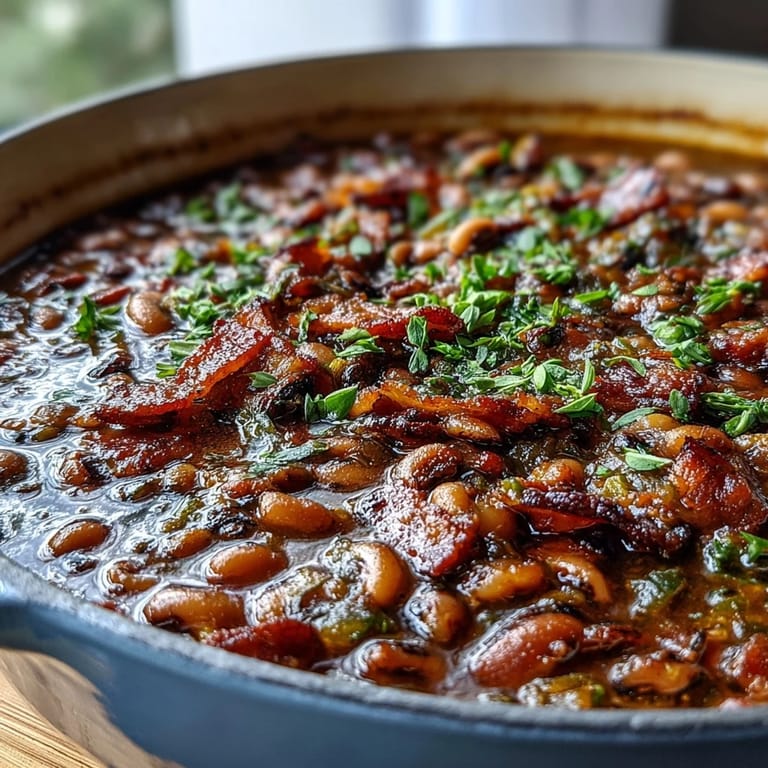
 This big pot of Texas black-eyed peas is one of those recipes that rewards you for paying attention but won't punish you if you get a little distracted. Make it for someone you care about, or make it for yourself on a day when you need something warm and honest.
Recipe FAQs
- → Do I need to soak black-eyed peas before cooking?
No soaking required. Dried black-eyed peas cook relatively quickly compared to other legumes. Just rinse, sort, and add directly to the pot.
- → Can I make this vegetarian?
Absolutely. Omit the bacon and add extra smoked paprika or a few drops of liquid smoke. Use vegetable broth instead of chicken broth for depth.
- → How spicy are these black-eyed peas?
Mild to medium heat. Two seeded jalapeños provide gentle warmth. Leave some seeds in or add cayenne if you prefer more kick.
- → What should I serve with Texas black-eyed peas?
Cornbread is the classic pairing. They're also delicious over steamed rice, alongside collard greens, or with crusty buttered bread.
- → How long do leftovers keep?
Refrigerate for up to 4 days. The flavors deepen and the broth thickens even more, making leftovers arguably better than freshly made.
- → Can I freeze these black-eyed peas?
Yes, freeze in airtight containers for up to 3 months. Thaw overnight in the refrigerator and reheat gently on the stovetop.