 Pin It
 My neighbor dropped by on a chilly October afternoon with a container of homemade black-eyed peas, and I remember thinking how humble they looked until I tasted the broth—rich, smoky, alive with sausage. That evening I decided to transform her gift into something with more substance, something that would stick to your ribs and warm you from the inside out. The fluffy dumplings came to me while I was standing at the stove, watching the steam rise, remembering my grandmother's kitchen where dumplings meant comfort and togetherness. Now whenever I make this, the whole house fills with that particular smell of cornmeal and thyme that somehow makes people linger longer at the table.
I made this for my book club once, and someone asked for the recipe before dessert was even served—that's when I knew it was special. The conversation shifted from whatever we were supposed to be discussing to people swapping stories about their own kitchen experiments, their own searches for comfort food. That's the power of a dish like this, something that opens people up and makes them remember their own dinners, their own moments of being taken care of through food.
Ingredients
- Smoked sausage (12 oz): This is your flavor anchor—choose kielbasa or andouille if you want something with more bite, and don't skip the browning step because that's where the magic starts.
- Black-eyed peas (2 cans): Always rinse them well, even though it feels unnecessary, because it removes the starchy liquid that can muddy your broth.
- Yellow cornmeal (1/2 cup): The secret to dumplings that are tender instead of dense—don't substitute it with all-purpose flour alone or you'll lose that distinctive texture.
- Buttermilk (3/4 cup): Room temperature buttermilk makes a difference in how the dumplings rise, so take it out of the fridge a few minutes before mixing.
- Chicken broth (4 cups): Low-sodium lets you control the salt and taste the actual depth of flavor from the sausage and vegetables.
- Fresh vegetables (onion, garlic, celery, carrot, bell pepper): These aren't just flavor builders—they soften during cooking and create a subtle sweetness that balances the smoked paprika and cayenne.
- Dried thyme and smoked paprika: Toast these briefly in your mind as you add them, because they're what make this taste like it's been simmering for hours instead of minutes.
Tired of Takeout? 🥡
Get 10 meals you can make faster than delivery arrives. Seriously.
One email. No spam. Unsubscribe anytime.
Instructions
- Brown the sausage first:
- Heat your oil and listen for that immediate sizzle when the sausage hits the pot—it should brown in about five minutes, developing a slightly crispy edge that will flavor everything around it.
- Build your flavor base with vegetables:
- After the sausage, add your onion, garlic, celery, carrot, and bell pepper, stirring occasionally until they're soft and releasing their sweetness into the hot oil, which takes about five to seven minutes.
- Create the broth and simmer:
- Pour in your chicken broth, add the rinsed black-eyed peas, thyme, smoked paprika, black pepper, cayenne if you're feeling adventurous, bay leaf, and salt. Bring it to a boil, then drop the heat and let it bubble gently uncovered for twenty-five minutes while you prepare the dumplings.
- Mix the dumpling batter with a light hand:
- In a separate bowl, whisk together flour, cornmeal, baking powder, baking soda, and salt—this creates the structure for your dumplings. Stir in melted butter and buttermilk just until everything comes together; overworking this batter is the enemy of tender dumplings.
- Check and adjust before the final step:
- Remove that bay leaf and taste the stew, adjusting salt and spice as needed because once you add the dumplings you won't be able to fix it easily.
- Drop and cover, the most critical moment:
- Using a spoon, drop roughly two-tablespoon spoonfuls of batter onto the simmering surface of the stew, cover the pot completely, and turn the heat to low. Now comes the hardest part: leave it alone for twenty to twenty-five minutes without peeking, because lifting that lid releases the steam that makes the dumplings puff and cook through.
- Serve with anticipation:
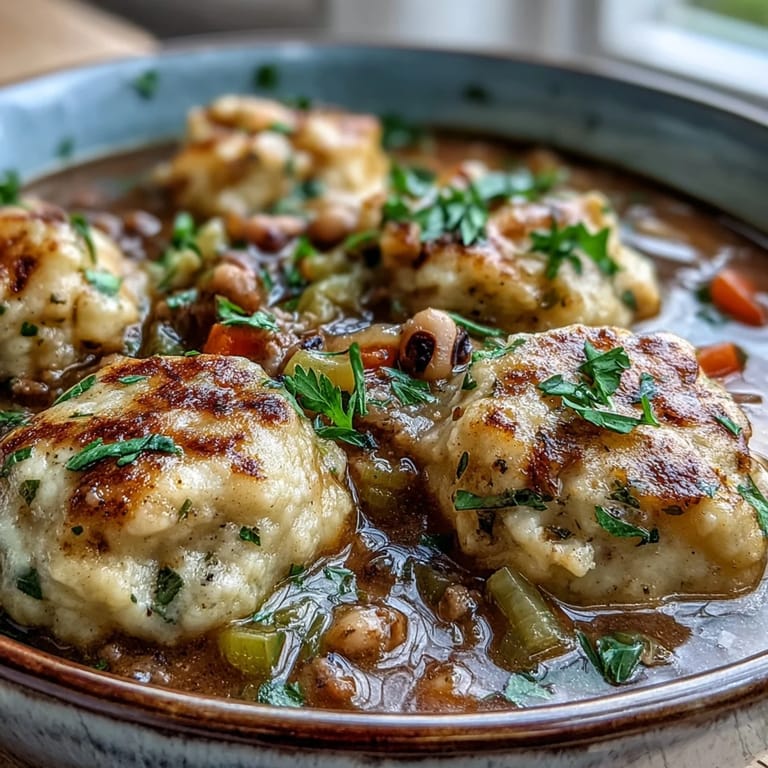
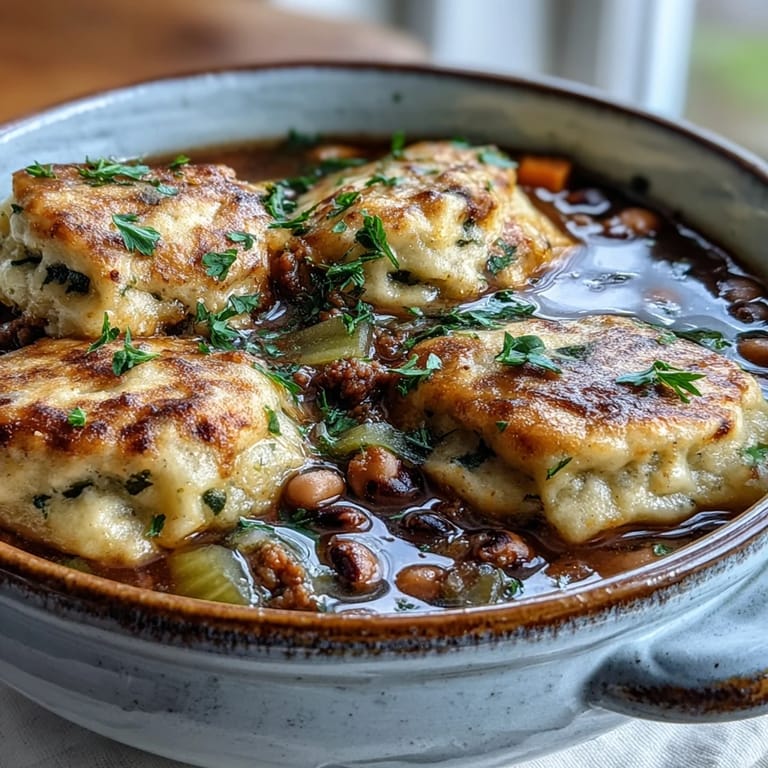
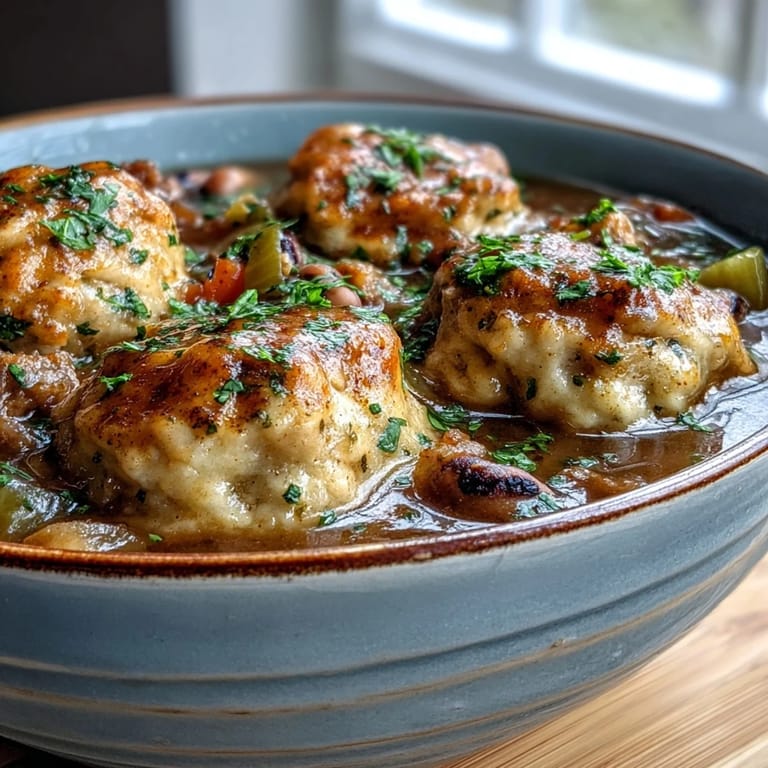
- When you finally lift the lid, you'll see golden, puffy dumplings sitting on top of the rich, dark stew below, and the smell will make everyone in the house suddenly very hungry.
 Pin It
 There was a night when my daughter, who usually picks at dinner, asked for a second bowl of this stew and actually finished it—dumplings and all. In that moment, watching her scrape the bowl clean, I understood that cooking isn't really about technique or ingredients, it's about creating something that matters enough to people that they slow down and pay attention.
Variations and Adaptations
I've played with this recipe in different seasons and moods, and it's remarkably forgiving once you understand what you're doing. In the warmer months, I sometimes reduce the broth slightly and add diced tomatoes for a lighter version that doesn't feel as heavy on a June evening. The beauty is that you can swap proteins—andouille sausage gives you heat, kielbasa gives you earthiness, or you can skip meat entirely and use vegetable broth with extra smoked paprika for depth.
Why This Dish Brings People Together
There's something about a one-pot meal that naturally encourages people to gather, to wait for something together. This isn't fast food or something you eat alone at your desk—it demands that you sit down, share a bowl, and maybe tell a story or two. The dumplings in particular seem to have this effect; they're like edible permission to slow down and savor something simple and honest.
Making It Your Own
Once you've made this a few times, you'll start noticing small things you'd like to change—maybe you want it spicier, maybe you prefer your dumplings a little thicker, or maybe you'll add diced jalapeños to the vegetable base. This is when cooking becomes less about following instructions and more about listening to what you want the dish to be. Every kitchen is different, every stove cooks differently, and your version will always be slightly different from mine, which is exactly how it should be.
- Taste as you go, especially before the dumplings go in, because seasoning is harder to adjust once everything is combined.
- Leftover stew reheats beautifully on the stovetop or in the microwave, though the dumplings are best enjoyed fresh.
- If you're doubling this recipe, use a larger pot and increase the simmering time by a few minutes to ensure everything reaches the right temperature.
 Pin It
 This recipe has become my go-to when I want to cook something that feels like care, like saying to someone without words that they matter enough to spend time at the stove. Every bowl holds that intention, and somehow people always taste it.
Recipe FAQs
- → Can I make this vegetarian?
Yes. Simply omit the smoked sausage and use vegetable broth instead of chicken broth. Add extra smoked paprika or a dash of liquid smoke to maintain that depth of flavor.
- → What type of sausage works best?
Andouille or kielbasa are excellent choices that bring authentic Southern flavor. Any smoked sausage will work well, adding depth and richness to the broth.
- → Can I use dried black-eyed peas instead of canned?
Absolutely. Soak 1 cup dried peas overnight, then cook them in broth for about 45-60 minutes until tender before adding vegetables and dumplings.
- → Why shouldn't I lift the lid while dumplings cook?
Keeping the lid trapped allows the dumplings to steam properly. Lifting it releases the steam and can cause dumplings to become dense or gummy instead of fluffy.
- → Can I make this ahead of time?
The stew base freezes beautifully for up to 3 months. However, add fresh dumplings when reheating, as they don't freeze well and are best made right before serving.
- → How do I store leftovers?
Store in an airtight container in the refrigerator for 3-4 days. The dumplings will absorb more liquid over time, so you may want to add a splash of broth when reheating.