 Pin It
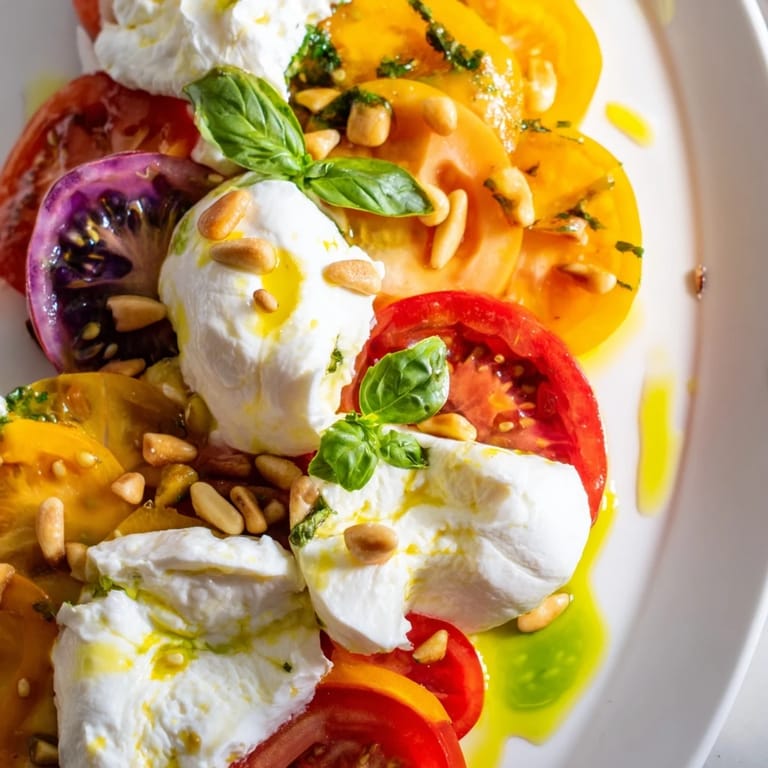
 It was late July when my neighbor handed me a basket of tomatoes still warm from the sun, their skins striped and blotched in colors I'd never seen at the grocery store. I'd been planning a simple caprese, but these tomatoes deserved more—something that let every shade and shape speak for itself. I tore open a ball of burrata, drizzled everything with basil oil I blended on a whim, and suddenly my cutting board became the most beautiful thing on the table. That afternoon taught me that sometimes the best recipes aren't recipes at all, just good ingredients given room to shine.
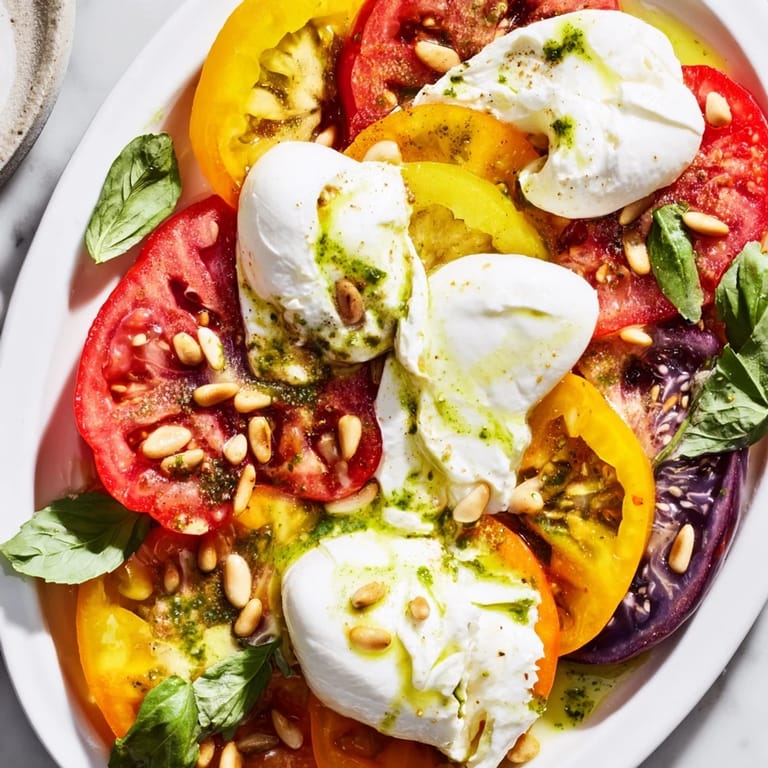
I made this for a backyard dinner party where I'd forgotten to plan an appetizer until an hour before guests arrived. I panicked, grabbed every heirloom tomato from my counter, and arranged them on a wooden board with burrata and basil oil. People circled that board like it was a work of art, tearing off bread and sighing with each bite. One friend asked if I'd taken a styling class, and I just laughed, because all I'd done was get out of the way and let the tomatoes do their thing.
Ingredients
- Assorted heirloom tomatoes: The star of the dish, their varied colors and sweet, tangy flavors create visual drama and depth that supermarket tomatoes simply can't match.
- Fresh burrata cheese: Creamy, rich, and mild, burrata melts into the tomatoes and basil oil, adding luxurious texture without overpowering the produce.
- Fresh basil leaves: Blended into oil, basil brings a peppery, aromatic punch that ties the whole board together with bright green vibrancy.
- Extra-virgin olive oil: The base of your basil oil, it should be fruity and smooth—use the good stuff here, because you'll taste every drop.
- Garlic clove: Just one small clove adds a whisper of sharpness to the basil oil without turning it into a garlic bomb.
- Flaky sea salt: Finishing salt is non-negotiable here, its delicate crunch and clean salinity make each tomato slice pop.
- Freshly ground black pepper: A few grinds add warmth and a subtle bite that balances the sweetness of the tomatoes and creaminess of the cheese.
- Pine nuts: Toasted until golden, they bring a nutty richness and gentle crunch that elevates the whole experience.
- Crusty bread or crostini: Essential for scooping up every last bit of burrata, tomato juice, and basil oil left on the board.
Tired of Takeout? 🥡
Get 10 meals you can make faster than delivery arrives. Seriously.
One email. No spam. Unsubscribe anytime.
Instructions
- Blend the basil oil:
- Drop basil, olive oil, garlic, and a pinch of salt into your blender and let it whir until the mixture turns bright green and silky. If you want it ultra-smooth, strain it through a fine sieve, but I often skip this step and embrace the rustic texture.
- Arrange the tomatoes:
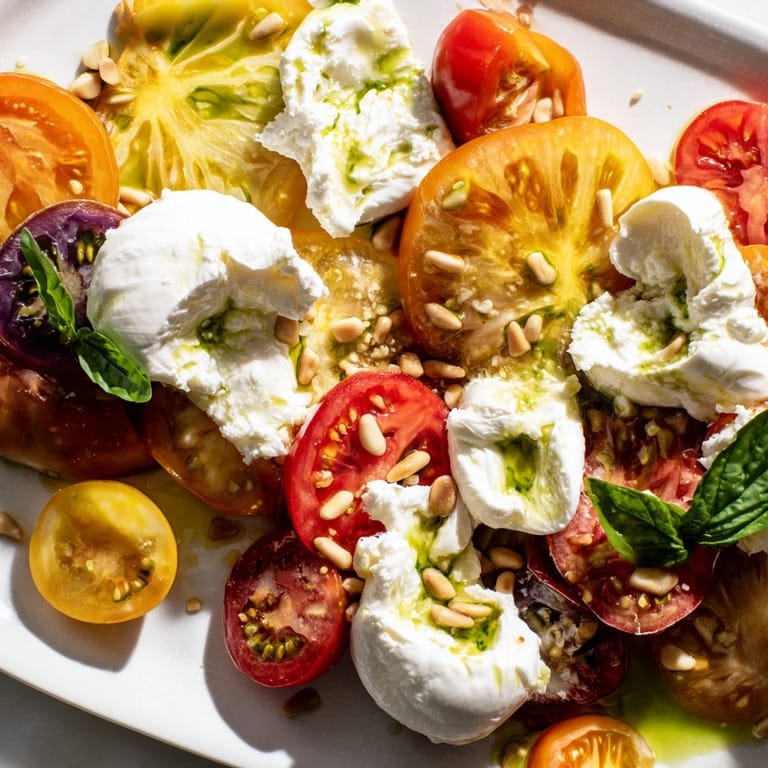
- Slice or halve your heirloom tomatoes depending on their size, then lay them out on a large board in overlapping clusters that show off their wild colors. Don't overthink it, the beauty is in the imperfection.
- Add the burrata:
- Tear each ball of burrata into a few large, irregular pieces and tuck them between the tomatoes. The creamy insides should spill out a little, creating pockets of richness.
- Drizzle and season:
- Pour the basil oil generously over everything, letting it pool in the crevices and coat the tomatoes. Finish with flaky sea salt, black pepper, toasted pine nuts, and a scattering of fresh basil leaves.
- Serve immediately:
- Set the board on the table with a stack of crusty bread or crostini on the side. Encourage everyone to dig in with their hands and soak up every bit of juice and oil.
 Pin It
 The best moment with this salad board happened when my nephew, who claimed to hate tomatoes, reached across the table and grabbed a slice covered in burrata. He took a bite, looked at me suspiciously, and asked what I'd done to make them taste like that. I told him I'd done nothing, that's just what tomatoes are supposed to taste like when they're ripe and treated with respect. He went back for three more pieces, and I counted it as a personal victory.
Choosing Your Tomatoes
Heirloom tomatoes come in wild varieties with names like Brandywine, Cherokee Purple, and Green Zebra, each with its own flavor profile and color. I like to mix striped, solid, and multicolored types so the board looks like a farmers market exploded in the best possible way. If heirlooms aren't available, grab the ripest tomatoes you can find, even a mix of cherry and beefsteak varieties will work. The key is variety in size and color, that contrast is what makes the board feel abundant and alive. Avoid anything that's been refrigerated at the store, because cold storage kills the sugars and aromatic compounds that make tomatoes sing.
Making the Basil Oil Shine
Basil oil is deceptively simple, but small choices make a big difference in how it tastes and looks. I always add just one small garlic clove because too much garlic overpowers the sweet, peppery basil notes that should take center stage. Blending it with a pinch of salt helps break down the basil leaves and creates a smoother emulsion. If your basil oil turns brown within minutes, your basil may have been bruised or your blender ran too long and heated the mixture. Some people blanch the basil first to keep it bright green longer, but I find that adds an extra step I don't need if I'm serving it right away.
Serving and Pairing Ideas
This salad board works best as a starter or a light lunch centerpiece, especially when you have a crowd that likes to graze and share. I've served it alongside grilled fish, roasted chicken, and even as part of a larger antipasto spread. It pairs beautifully with crisp white wines like Sauvignon Blanc or a chilled dry Rosé, both cut through the richness of the burrata and highlight the tomatoes' acidity. If you want to make it more substantial, add a few handfuls of arugula, some thinly sliced prosciutto, or a drizzle of aged balsamic.
- For a vegan version, swap burrata for cashew cream or a good plant-based mozzarella.
- If you can't find pine nuts, toasted walnuts or almonds add a similar crunch and richness.
- Leftover basil oil keeps in the fridge for up to three days and is incredible tossed with pasta or drizzled over scrambled eggs.
 Pin It
 This salad board has become my summer default whenever I want to impress without the stress, and it never fails to make people slow down and savor. There's something about tearing into creamy burrata and biting into a sun-warmed tomato that just feels like the best kind of indulgence.
Recipe FAQs
- → Can I make the basil oil ahead of time?
Yes, prepare the basil oil up to 24 hours in advance and store it in a sealed container in the refrigerator. Let it come to room temperature before drizzling over the salad board for best flavor and texture.
- → What are the best heirloom tomato varieties for this?
Look for a mix of colors and sizes such as Brandywine, Cherokee Purple, Green Zebra, or Yellow Pear tomatoes. The variety creates visual appeal and offers different flavor profiles from sweet to tangy.
- → Can I substitute burrata cheese?
Absolutely. Fresh mozzarella, ricotta, or vegan cheese alternatives work well as substitutes. Each brings its own creamy texture and will pair beautifully with the tomatoes and basil oil.
- → How should I arrange the tomatoes on the board?
Slice larger tomatoes into wedges and halve cherry varieties. Arrange them in overlapping layers or clusters across your board, leaving gaps for the burrata. This showcases the different colors and creates an inviting presentation.
- → What wine pairs best with this dish?
Crisp white wines like Sauvignon Blanc or a dry Rosé complement the fresh tomatoes and basil perfectly. The acidity cuts through the richness of the burrata and enhances the herbal notes of the basil oil.
- → How do I prevent the basil oil from oxidizing and losing its color?
Strain the basil oil through a fine sieve immediately after blending to remove any solids that accelerate browning. Keep it in an airtight container and use it the same day for vibrant green color. If making ahead, blanch the basil briefly in boiling water first to set its color.