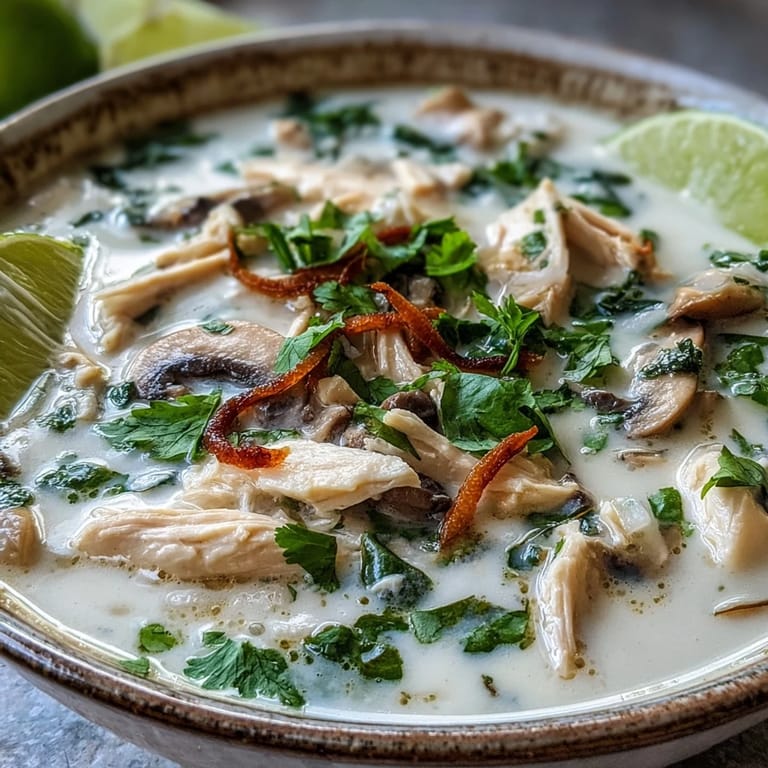
 Pin It
 The first time I made Tom Kha Gai was after returning from a backpacking trip through Thailand where I had fallen in love with its intoxicating fragrance. Standing in my small apartment kitchen, the familiar scent of lemongrass and coconut milk transported me right back to that tiny street stall in Chiang Mai. My American attempt was missing something until an elderly Thai woman at the Asian market insisted I needed real galangal, not ginger, gently scolding me with a knowing smile.
Last winter when my sister was down with a terrible cold, I brought over a thermos of this soup. She called it her Thai penicillin and swears it cured her faster than any medicine. We sat wrapped in blankets on her couch, steam rising from our bowls, the tangy lime and creamy coconut creating this perfect balance that seemed to chase away both the chill and her sniffles. Now she requests it whenever she feels even slightly under the weather.
Ingredients
- Galangal: This knobby rhizome might look like ginger but delivers a completely different flavor profile with citrusy, pine-like notes that form the backbone of authentic Tom Kha Gai.
- Makrut Lime Leaves: These glossy, hourglass-shaped leaves release an intense citrus oil that no substitute can truly replicate, so I always freeze extras whenever I find them.
- Coconut Milk: Please splurge on full-fat, unsweetened coconut milk as the light versions simply wont create that silky, rich broth that makes this soup so comforting.
- Fish Sauce: Though it smells potent in the bottle, it transforms completely in the soup, adding that mysterious umami depth that makes you go back for another spoonful.
- Thai Birds Eye Chilies: These tiny peppers pack serious heat, but crushing them lightly rather than chopping allows you to control the spice level by removing them earlier if needed.
Tired of Takeout? 🥡
Get 10 meals you can make faster than delivery arrives. Seriously.
One email. No spam. Unsubscribe anytime.
Instructions
- Infuse the Broth:
- Begin by bringing your chicken broth to that perfect gentle simmer where small bubbles just break the surface. Add your aromatics and let them steep like a fragrant tea, releasing their essential oils into the liquid.
- Cook the Protein:
- Slide in those thin slices of chicken and watch as they gradually transform from translucent to opaque, curling slightly at the edges. The meat will continue cooking in the residual heat, so dont worry if its not completely done at this stage.
- Create the Silky Base:
- When you pour in the coconut milk, do it slowly and stir with intention, watching as the clear broth transforms into that signature milky white soup. Keep the heat gentle here to prevent the coconut milk from breaking.
- Balance the Flavors:
- This is where the magic happens as you add fish sauce for salt, palm sugar for sweetness, and lime juice for that crucial sour note. Take your time tasting and adjusting until the soup sings with that perfect harmony of flavors.
- Finish with Freshness:
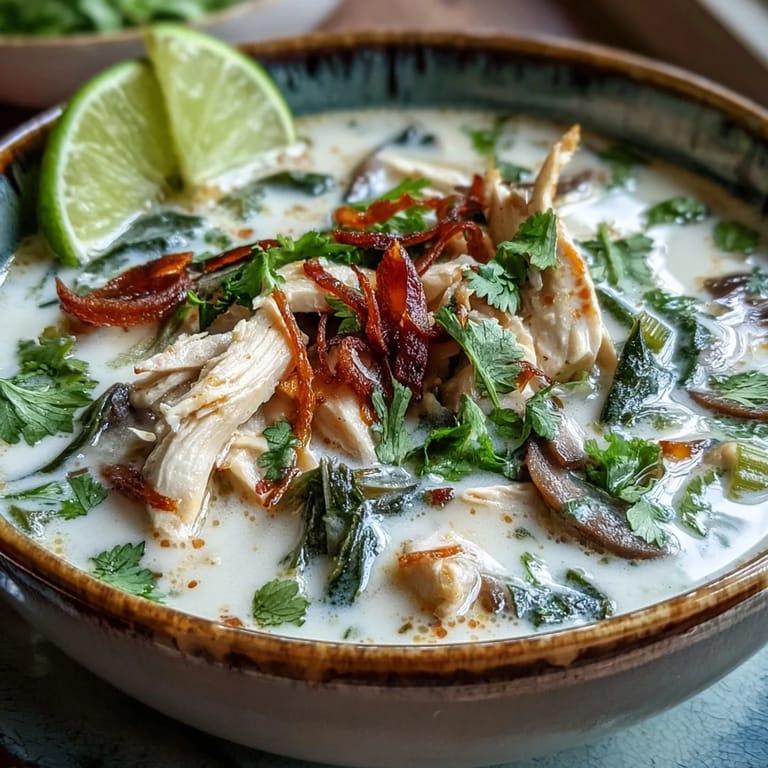
- Just before serving, scatter those vibrant green herbs over the top, adding both color and that final layer of fresh flavor. A squeeze of lime at the table brings everything into sharp, bright focus.
 Pin It
 My most cherished memory of this soup happened during a surprise April snowstorm when neighbors lost power and ended up gathering in our kitchen, the only house on the block with a gas stove. I had just made a huge pot of Tom Kha Gai, and as we huddled around the warm stove, passing bowls between strangers who quickly became friends, I witnessed how food could transform a potential disaster into something beautiful. The conversation flowed as easily as the soup, with someone remarking that they could taste sunshine in the middle of a blizzard.
Finding Authentic Ingredients
The hunt for galangal and makrut lime leaves has led me to discover incredible Asian markets tucked away in unexpected corners of my city. These places have become my Saturday morning adventure spots, where I now know the shop owners by name and they occasionally save special ingredients for me. If you cant find fresh galangal, look in the freezer section where its often stored to preserve its potent qualities. When I find it fresh, I buy extra, slice it, and freeze it myself for future soups.
Serving Suggestions
While Tom Kha Gai stands brilliantly on its own, serving it alongside a small bowl of jasmine rice creates a more substantial meal. The rice soaks up that flavorful broth, and I love adding a spoonful to each bite of soup. For gatherings, I set up a small condiment station with extra lime wedges, sliced chilies, fish sauce, and a dish of chopped cilantro, letting everyone customize their bowl to their perfect level of heat, tang, and herbaceousness.
Making It Your Own
After making this soup countless times, Ive learned that its incredibly forgiving and adaptable to what you have on hand or dietary preferences. The vegetarian version with meaty mushrooms and firm tofu cubes has become a favorite for my plant-based friends, who appreciate that the umami depth doesnt suffer despite the substitutions.
- For seafood lovers, try swapping the chicken for shrimp, adding them in the last few minutes to prevent overcooking.
- If serving kids or spice-sensitive guests, omit the chilies from the main pot and instead offer them as a tableside addition.
- For a heartier version, add thinly sliced vegetables like bell peppers, baby corn, or snow peas in the last few minutes of cooking.
 Pin It
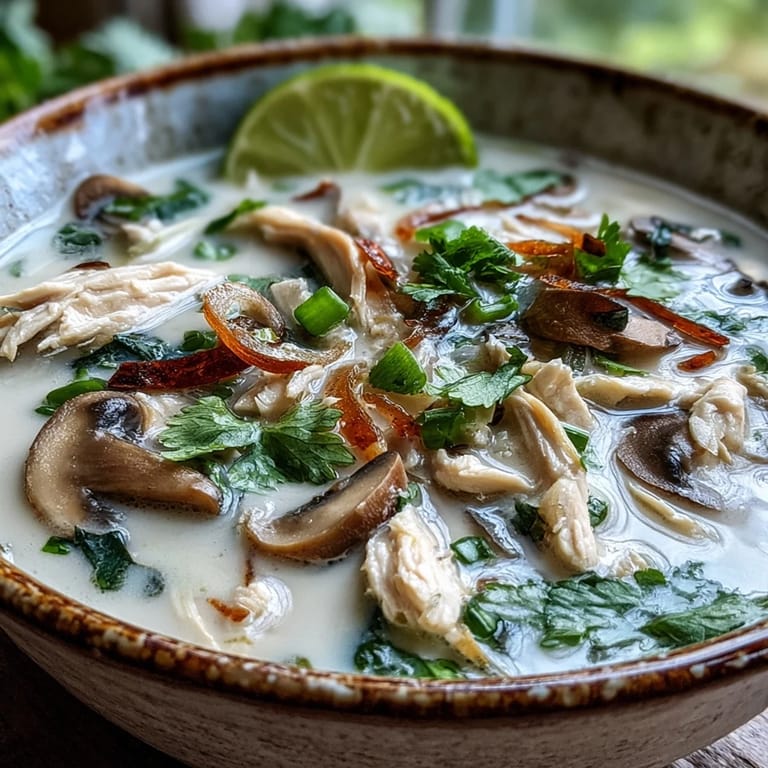
 This soup has taught me that sometimes the most profound flavors come from the simplest preparations, where quality ingredients are allowed to speak for themselves. Whether youre making it for comfort, healing, or pure pleasure, Tom Kha Gai offers a moment of mindful appreciation with every spoonful.
Recipe FAQs
- → What makes Tom Kha Gai different from Tom Yum?
Tom Kha Gai features coconut milk as its base, creating a rich and creamy texture, while Tom Yum is a clear, broth-based soup. The coconut in Tom Kha adds natural sweetness and body, making it milder and more indulgent compared to Tom Yum's sharp, sour profile.
- → Can I substitute galangal with ginger?
While ginger can work as a substitute, galangal has a distinct citrusy, pine-like flavor that's essential to authentic taste. If using ginger, use about half the amount since it's more pungent. For the best results, seek out fresh or frozen galangal at Asian markets.
- → How spicy is this soup traditionally?
Traditional Tom Kha Gai features mild to medium heat from bird's eye chilies. The spice level is adjustable—start with 2-3 chilies for moderate heat, or reduce to 1 for a milder version. The heat should complement rather than overpower the other flavors.
- → Can I make this soup vegetarian?
Absolutely. Substitute chicken broth with vegetable broth, replace chicken thighs with firm tofu cubes, and use soy sauce or tamari instead of fish sauce. The aromatic base remains the same, delivering the same fragrant essence in a plant-based version.
- → Why shouldn't I let the coconut milk boil?
Boiling coconut milk can cause it to separate and become grainy. Simmer gently once the coconut milk is added—just enough to heat through and blend flavors. This preserves the smooth, creamy texture that makes this soup so luxurious.
- → How long does this soup keep?
Store in an airtight container in the refrigerator for up to 3 days. Reheat gently over low heat, avoiding boiling to prevent separation. The flavors often develop and improve overnight, making it excellent for meal prep.