 Pin It
 There's something magical about the moment when roasted carrots hit hot broth and fill your kitchen with that sweet, earthy warmth. I discovered this soup almost by accident one October, when I had a bag of carrots that needed rescuing and a bottle of maple syrup staring at me from the cupboard. The combination felt bold at first, but that first spoonful changed everything—suddenly I understood why certain flavors belong together.
I made this for my sister on a gray November afternoon when she arrived at my door needing warmth and quiet conversation. Watching her face as she tasted it—that moment when someone's shoulders actually relax because of something you made—that's when I knew this recipe was worth keeping. She asked for seconds, then wanted the recipe, and I realized it was the kind of soup that becomes shorthand for showing up for someone.
Ingredients
- Carrots (1 lb, peeled and chopped): The star of the show; look for ones that feel heavy and smell slightly sweet even raw, as they'll roast into something entirely different.
- Sweet potato (1 medium, peeled and diced): Adds natural sweetness and a silky texture that makes blending easier than you'd expect.
- Parsnip (1 medium, peeled and diced): The secret ingredient nobody talks about; it brings an earthy, slightly nutty depth that prevents the soup from tasting one-note.
- Onion (1 medium, chopped): The foundation layer that builds flavor as it softens in the pot.
- Garlic (2 cloves, minced): Just enough to whisper in the background without overwhelming the vegetables.
- Vegetable broth (4 cups): Use a good quality broth if you can; it makes more difference than you'd think in a simple soup.
- Coconut milk or heavy cream (1 cup): Either works beautifully; coconut milk keeps it vegan, cream makes it more indulgent.
- Pure maple syrup (2 tbsp): The bridge that ties everything together; avoid the pancake syrups, they're missing the complexity.
- Olive oil (2 tbsp total): Split between roasting the vegetables and sautéing the aromatics for maximum flavor.
- Ground ginger (1 tsp): Brings warmth and a subtle spice that plays beautifully with the maple.
- Ground cinnamon (1/2 tsp): A whisper of spice that says autumn without shouting.
- Salt and pepper: Always taste and adjust at the end; every broth is different.
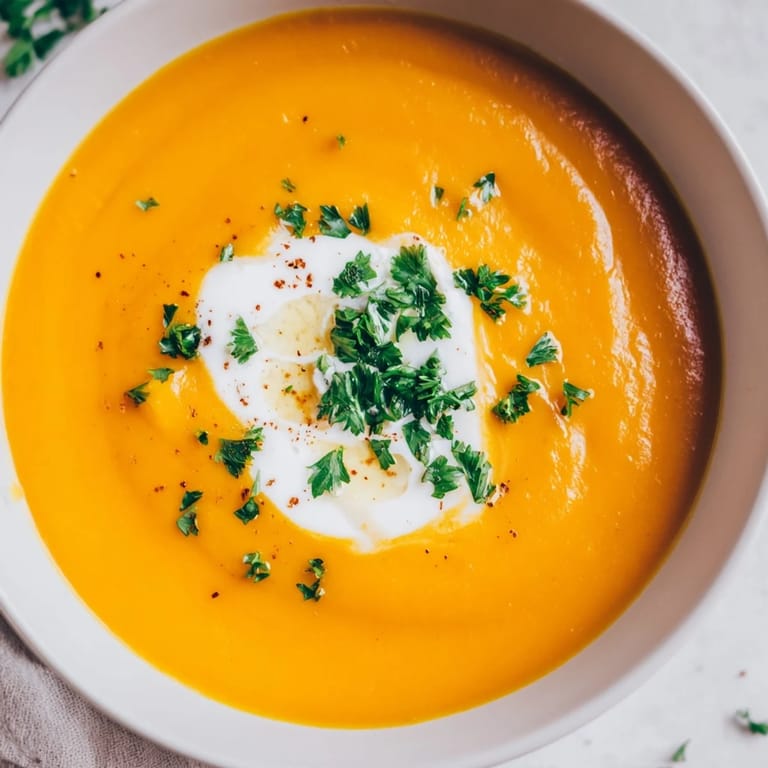
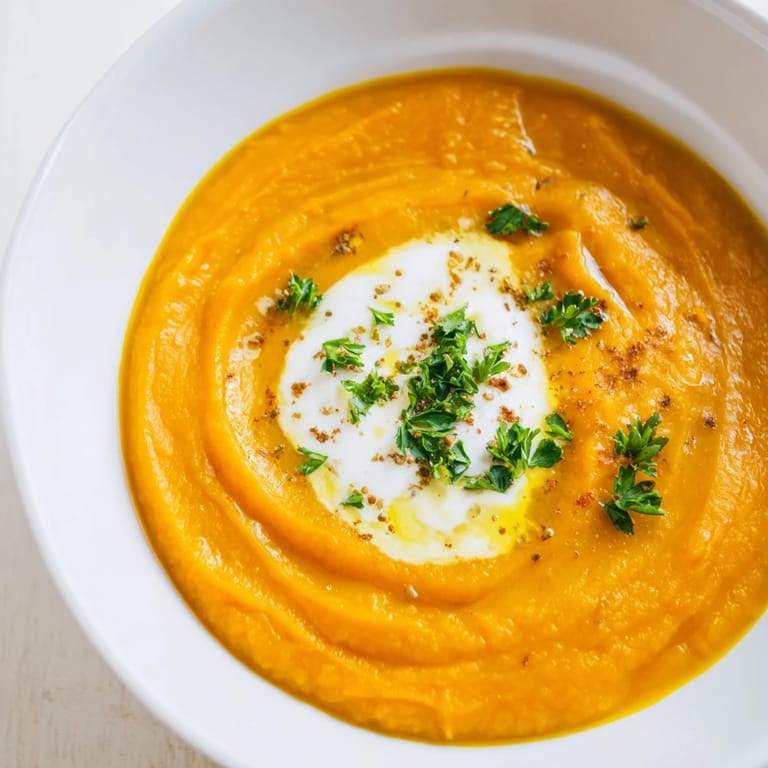
- Garnish options (parsley, yogurt, extra maple syrup): These aren't fancy—they're what keeps the soup from feeling too heavy and add little moments of brightness.
Tired of Takeout? 🥡
Get 10 meals you can make faster than delivery arrives. Seriously.
One email. No spam. Unsubscribe anytime.
Instructions
- Fire up the oven and prepare vegetables:
- Preheat your oven to 400°F. As it heats, peel and chop your carrots, sweet potato, and parsnip into roughly bite-sized pieces; they'll shrink as they roast, so don't overthink the sizing.
- Roast your way to caramel:
- Toss the chopped vegetables with 1 tbsp olive oil, a good pinch of salt, and pepper. Spread them on a baking sheet and listen for them to start sizzling immediately when they hit the hot pan—that's how you know the oven is ready. Roast for 25 to 30 minutes, stirring halfway through, until the edges are golden brown and they smell sweet enough to eat with a spoon.
- Build the flavor base:
- While the vegetables roast, heat the remaining 1 tbsp olive oil in a large pot over medium heat. Chop your onion and add it to the pot, letting it soften and turn translucent, about 5 minutes. Mince your garlic, then add it along with the ground ginger and cinnamon, stirring constantly for just 1 minute until the spices bloom and your kitchen smells like a cozy kitchen should.
- Bring it together:
- Add your roasted vegetables to the pot, then pour in the vegetable broth. Bring everything to a simmer and let it cook gently for 10 minutes, letting all those roasted flavors meld with the broth into something cohesive. The soup will smell almost sweet at this point.
- Make it creamy:
- Remove the pot from heat and stir in the maple syrup and coconut milk (or cream). Using an immersion blender, blend the soup directly in the pot until it reaches that perfect velvety consistency, or if you prefer, work carefully in batches with a regular blender, making sure never to fill it more than halfway and always letting hot soup cool slightly before blending.
- Taste and adjust:
- Give it a taste and add more salt and pepper if it needs them; sometimes the broth is salty enough that you need less, sometimes you need more. This is where your judgment makes the recipe yours.
- Serve with intention:
- Ladle the soup into bowls while it's hot, and garnish with whatever appeals to you—a scatter of fresh parsley brings brightness, a dollop of yogurt adds tang, and an extra drizzle of maple syrup reminds you why you fell in love with this soup in the first place.
 Pin It
 I learned the real power of this soup one snowy evening when a friend called feeling under the weather, and I showed up at her door with a thermos of it and nothing else to say. Sometimes the best recipe is the one that speaks when you're out of words.
Why Root Vegetables Are Underrated
Root vegetables often get dismissed as boring or wintry, but they're actually some of the most forgiving and flavorful vegetables to cook with once you understand them. When you roast them, their natural sugars concentrate and caramelize, turning something ordinary into something that tastes intentional. This soup taught me that carrots, sweet potatoes, and parsnips aren't just side dishes; they're the backbone of comfort food, and they deserve respect.
The Maple Syrup Question
You might wonder if using maple syrup in a savory soup is strange, and the honest answer is that it's not strange at all—it's actually how real food tastes before we started separating sweet and savory so rigidly. Real maple syrup has complexity that refined sugar doesn't have; it brings molasses-like depth, a touch of woodland earthiness, and a smoothness that makes the soup feel less like you followed a recipe and more like you understand something about flavor. The amount is small enough that nobody tastes maple syrup specifically; they just taste a soup that tastes like itself, finished and whole.
Variations Worth Exploring
This soup is flexible enough to bend to what you have on hand and what season you're cooking in. The ratio of vegetables matters more than the exact combination, so if you have butternut squash instead of sweet potato, or extra parsnip instead of some carrots, the soup will still be delicious. I've added a pinch of smoked paprika before, roasted the vegetables with a bit of ground cardamom instead of cinnamon, and even thinned it slightly with apple cider instead of extra broth for a soup that tastes almost like autumn drinking a warm hug.
- Try adding a pinch of smoked paprika or nutmeg if you want to shift the flavor in unexpected directions.
- A squeeze of fresh lemon juice or a splash of white wine at the end brightens everything without making it taste acidic.
- Roast the vegetables with a sprig of fresh thyme or rosemary for a more herbaceous take on the same soup.
 Pin It
 This soup has become my answer to questions I can't solve with words—a way of saying I'm thinking of you when someone needs warmth. That's the kind of recipe worth holding onto.
Recipe FAQs
- → What vegetables are used in this dish?
This includes carrots, sweet potato, and parsnip, creating a natural sweetness and creamy texture after roasting.
- → How does maple syrup affect the flavor?
Maple syrup adds subtle sweetness and depth that complements the roasted vegetables and warming spices.
- → Can I use a substitute for coconut milk?
Heavy cream can be used instead of coconut milk for a richer, dairy-based variation.
- → What spices enhance this preparation?
Ground ginger and cinnamon add warmth and aromatic notes that balance the natural sweetness of the vegetables.
- → Is roasting necessary before blending?
Roasting caramelizes the vegetables, enhancing their flavor and sweetness, which is key to the dish's richness.