 Pin It
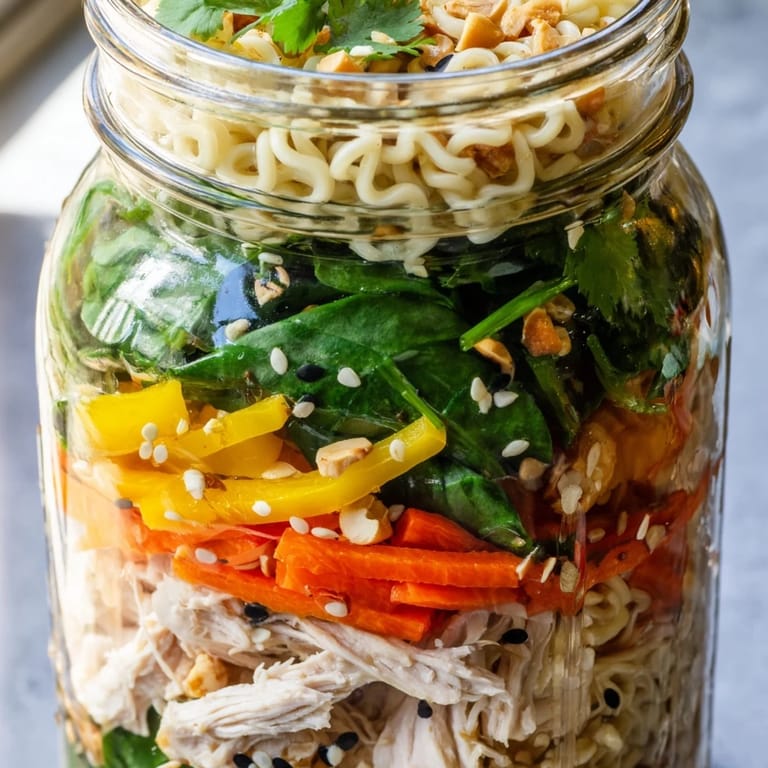
 My coworker showed me her lunch one Tuesday, and I thought she'd brought a science project to the office. Layers of bright vegetables and noodles pressed against glass, everything visible like a tiny edible terrarium. She poured hot water in, gave it a shake, and five minutes later was twirling perfect noodles while I ate my sad sandwich. I bought mason jars that weekend.
I made these the night before a long work trip, lining them up on the hotel mini fridge shelf like little soldiers. My colleague walked in, saw them, and asked if I was selling lunches. By Thursday, three people had texted asking for the recipe. There's something about food in a jar that makes people curious, like you've cracked some secret code to eating well when life gets chaotic.
Ingredients
- Dried ramen or rice noodles (200 g): Rice noodles give you that slippery, delicate texture, while ramen holds up better if you like a chewier bite. I rinse them cold right after cooking so they don't clump into a single noodle brick.
- Cooked chicken breast, tofu, or shrimp (200 g, diced): Whatever protein you use, make sure it's fully cooked and cooled before layering. I often use rotisserie chicken because I'm not above shortcuts.
- Shredded carrots (1 cup): These add sweetness and crunch, plus they look cheerful through the glass. I buy them pre shredded when I'm feeling lazy.
- Thinly sliced bell peppers (1 cup, red or yellow): Red and yellow are sweeter than green and photograph better, which matters more than I'd like to admit. Slice them thin so they soften slightly when you add the hot water.
- Baby spinach or kale (1 cup): Spinach wilts into tenderness, kale stays a bit toothier. Both work, just depends on your texture mood.
- Thinly sliced scallions (1/2 cup): The white and green parts both matter here, sharpness at the bottom, sweetness at the top.
- Bean sprouts (1/2 cup): They stay surprisingly crunchy even after a few days, and they bulk up the jar without adding much weight.
- Soy sauce (4 tbsp): This is your salt and your umami base. I use low sodium because the other flavors are strong enough to carry it.
- Rice vinegar (2 tbsp): Adds the bright, tangy note that keeps the sauce from feeling heavy. Don't skip it.
- Sesame oil (2 tbsp): A little goes a long way. This is what makes everything smell like takeout.
- Honey or maple syrup (1 tbsp): Just enough sweetness to balance the vinegar and soy. Maple syrup keeps it vegan if that matters to you.
- Sriracha or chili sauce (2 tsp, optional): I add it every time because I like the heat, but my friend leaves it out and her jars still taste complete.
- Garlic (1 clove, minced): Fresh garlic makes the sauce come alive. Jarred works in a pinch, but it's not quite the same.
- Fresh ginger (1 tsp, grated): This is the ingredient that makes people ask what's in the sauce. It adds warmth and a tiny floral sharpness.
- Chopped cilantro (2 tbsp, optional): I know cilantro is divisive, so I keep it as a topping. You can skip it or swap in basil.
- Roasted peanuts or cashews (2 tbsp, chopped, optional): The crunch right before you eat makes all the difference. Add them fresh, not in the jar.
- Sesame seeds (1 tbsp, optional): Mostly for looks, but they do add a tiny nutty note when you bite into them.
- Lime wedges (optional): A squeeze right before eating wakes everything up. I always pack one separately.
Tired of Takeout? 🥡
Get 10 meals you can make faster than delivery arrives. Seriously.
One email. No spam. Unsubscribe anytime.
Instructions
- Cook the noodles:
- Boil the noodles according to the package, then drain and rinse them under cold water until they're completely cool. This stops them from turning gummy and keeps them separate.
- Make the sauce:
- Whisk together soy sauce, rice vinegar, sesame oil, honey, Sriracha, garlic, and ginger in a small bowl until it's smooth and fragrant. Taste it, if you want more heat or sweetness, adjust now.
- Divide the sauce:
- Pour equal amounts of sauce into the bottom of each mason jar. The sauce goes first so it doesn't make everything soggy while it sits.
- Layer the protein:
- Add your cooked chicken, tofu, or shrimp directly on top of the sauce. This keeps the protein flavorful and lets it marinate slightly in the fridge.
- Add the vegetables:
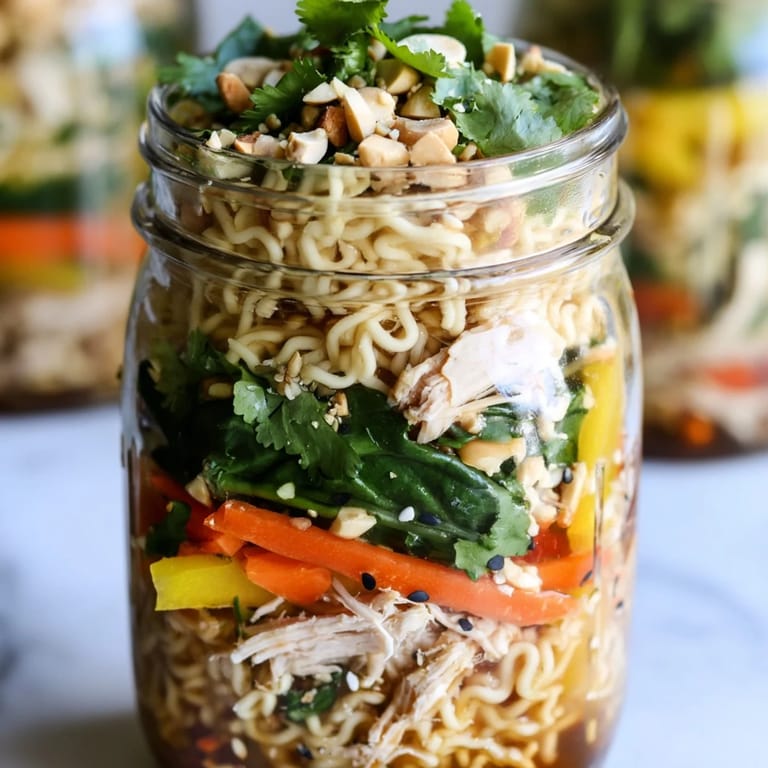
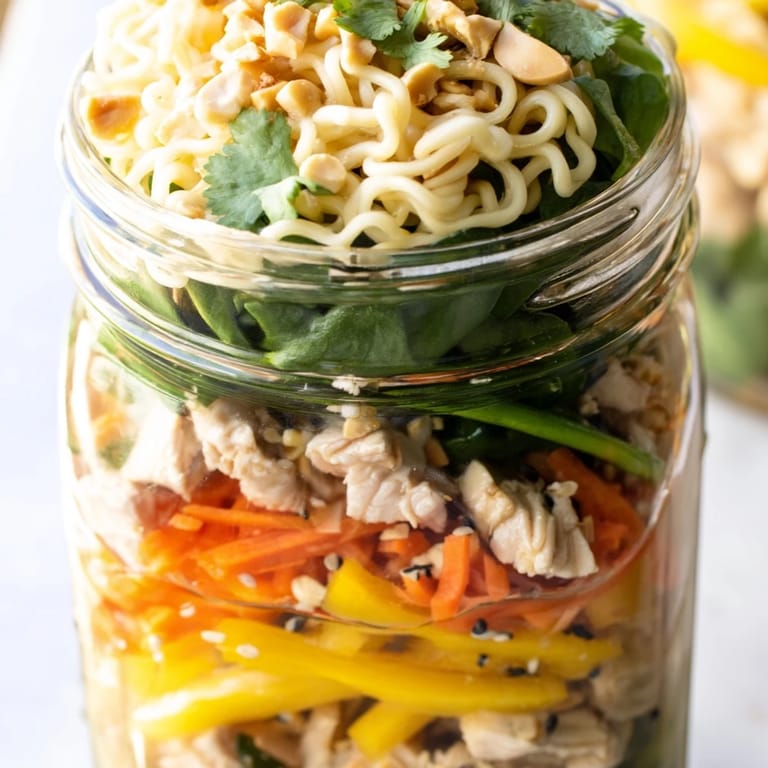
- Layer in the carrots, bell peppers, spinach, scallions, and bean sprouts in that order. Press them down gently so everything fits without crushing.
- Top with noodles:
- Add the cooked noodles as the final layer, filling the jar almost to the top. This keeps them driest and prevents them from soaking up moisture too early.
- Seal and refrigerate:
- Screw the lids on tightly and store the jars in the fridge. They'll keep for up to four days, though mine rarely last that long.
- Serve:
- When you're ready to eat, remove the lid, add any toppings, and pour about half a cup of hot water into the jar. Let it sit for two to three minutes, then stir everything together and eat straight from the jar or pour it into a bowl.
 Pin It
 I brought one of these jars to a picnic once, and my friend's kid watched me pour the hot water in like I was doing a magic trick. She asked if all food came in jars now, and honestly, I kind of wished it did. There's something satisfying about a meal that's contained, visible, and ready when you are. It turns lunch into a small event instead of just fuel.
Choosing Your Noodles
Rice noodles are lighter and more delicate, perfect if you want the vegetables to be the star. Ramen noodles are heartier and more filling, better for days when you need something that sticks with you. I've tried soba noodles too, and they work, but they have a stronger flavor that competes with the sauce. If you're going low carb, spiralized zucchini noodles or shirataki noodles fit in the jars just as well, though they won't need hot water to rehydrate.
Protein Swaps and Shortcuts
Rotisserie chicken is my go to when I don't feel like cooking. Baked tofu adds a firm, satisfying chew, especially if you press it first to get rid of excess water. Shrimp cooks fast and feels a little fancy, but make sure it's fully cooled before you layer it in. I've also used hard boiled eggs, sliced thin, and edamame for a completely plant based version. The sauce is flexible enough to make anything taste intentional.
Storage and Meal Prep Timing
These jars hold up for four days in the fridge, but the vegetables start losing their crunch after that. I usually make them on Sunday night and eat the last one on Thursday. If you're nervous about the spinach wilting, add it to the top layer with the noodles instead of in the middle. The sauce at the bottom stays potent and doesn't water down, which is one of the best things about this method.
- Label the jars with the date if you're making a big batch.
- Stack them carefully so the lids don't pop off in a crowded fridge.
- Keep toppings in a separate small container if you're taking them to work.
 Pin It
 Once you get the layering order down, you'll start seeing everything as jar potential. It's one of those recipes that makes you feel capable, like you've figured out how to take care of yourself even when the week gets wild.
Recipe FAQs
- → Why do you layer ingredients in a specific order?
Layering protects delicate vegetables and keeps noodles from absorbing excess moisture. Place sauce at the bottom, then protein, vegetables in the middle, and noodles on top. This order maintains texture and flavor until serving time.
- → How long can these jars stay in the refrigerator?
These prepared jars keep refrigerated for up to 4 days. The sauce acts as a preservative, and the layering method prevents vegetables from becoming soggy or degrading quickly.
- → Can you freeze mason jar noodles?
Freezing is not recommended as the sauce may separate and vegetables can become waterlogged upon thawing. Prepare fresh jars as needed or store components separately and assemble when ready to eat.
- → What vegetables work best for this preparation?
Crisp vegetables that hold texture work best: shredded carrots, bell peppers, scallions, bean sprouts, and leafy greens. Avoid soft vegetables like tomatoes or cucumbers that release excess moisture.
- → How much hot water should you add when serving?
Add approximately 1/2 cup hot water to soften the noodles and warm the entire preparation. Let sit 2-3 minutes before mixing. Adjust water amount based on noodle type and personal preference for broth consistency.
- → Are there protein alternatives for this meal?
Yes, substitute cooked chicken, shrimp, or tofu with edamame, chickpeas, tempeh, or hard-boiled eggs. Ensure protein is cooked and cooled before layering to maintain food safety and jar shelf life.