 Pin It
 I discovered biryani quite by accident on a weeknight when I was standing in my kitchen with leftover chicken and a craving for something more interesting than plain rice. My neighbor had just given me a bottle of saffron from her trip to India, and I realized I finally had an excuse to use it. What started as an improvisation—layering chicken with fragrant spices and rice in one pot—became a dish I now make whenever I want my kitchen to smell like someone's been cooking all day. The beauty of this easy version is that it tastes like you've spent hours on it, but you'll have dinner ready in less than an hour.
I made this for my partner one evening after a long day, and the moment they walked through the door, their whole expression changed. The house smelled like a spice market, and before I'd even plated it, they were leaning over the pot with a fork ready. That's when I knew this recipe was a keeper—it's the kind of dish that turns a regular Tuesday into something worth remembering.
Ingredients
- Boneless, skinless chicken thighs (500 g): Thighs stay tender and flavorful during cooking, unlike breast meat which can dry out; cut them bite-sized so they cook through evenly.
- Plain yogurt (2 tbsp): The acid tenderizes the chicken while the yogurt clings to each piece, creating a creamy coating that traps the spices.
- Ground turmeric, cumin, coriander (1 tsp each): These warm spices are the backbone of the dish; toasting them briefly in hot oil brings out their deeper notes.
- Chili powder (1 tsp optional): Add only if you like heat; I've learned that this can overpower the more delicate flavors if you're not careful.
- Basmati rice (300 g): Rinsing the rice removes excess starch and helps the grains stay separate and fluffy instead of clumping together.
- Water (600 ml): The exact ratio matters; too much water and you'll have a soggy mess, too little and your rice won't cook through.
- Vegetable oil or ghee (2 tbsp): Ghee adds a nutty richness, but any neutral oil works; the fat helps release the flavors of the whole spices.
- Large onion, finely sliced (1): Sliced thin ensures they caramelize evenly and become golden rather than burnt.
- Garlic and ginger (2 cloves and 1 tbsp minced): Mince them small so they distribute throughout every bite and meld seamlessly with the rice.
- Large tomato, diced (1): The tomato adds brightness and acidity that cuts through the richness of the spices and chicken.
- Whole spices—bay leaf, cloves, cardamom, cinnamon (1 each): These whole spices infuse the dish with fragrance as the rice cooks; they're not meant to be eaten, so warn your guests.
- Fresh cilantro and fried onions for garnish: The cilantro adds a fresh herbal note at the end, while crispy onions give you a textural surprise in every spoonful.
Tired of Takeout? 🥡
Get 10 meals you can make faster than delivery arrives. Seriously.
One email. No spam. Unsubscribe anytime.
Instructions
- Marinate the chicken with intention:
- Combine your chicken pieces with yogurt, turmeric, cumin, coriander, chili powder, and salt in a bowl, mixing until every piece is coated. Let it sit for at least 10 minutes while you prep the rest; the yogurt will start breaking down the protein and your kitchen will already begin smelling incredible.
- Build the aromatic base:
- Heat oil or ghee in your pot over medium heat and add the sliced onions, stirring frequently until they turn a deep golden brown around the edges—this takes about 6 to 8 minutes and is worth the patience because it builds the flavor foundation for everything else. Once they're golden, add your minced garlic and ginger, cooking just until the raw edge disappears and the aroma hits you, roughly 1 minute.
- Coax out the tomato's sweetness:
- Stir in your diced tomato and let it cook down for 2 to 3 minutes, breaking it apart slightly with your spoon as it softens and begins to meld with the onions and spices.
- Awaken the whole spices:
- Add your bay leaf, cloves, cardamom pods, and cinnamon stick, stirring gently to release their oils and fragrance into the hot oil—you'll smell the shift immediately, about 1 minute of stirring.
- Introduce the marinated chicken:
- Add all your marinated chicken pieces to the pot and stir to combine with the spice mixture, letting them cook for 5 to 7 minutes until the chicken is lightly browned on the outside and partially cooked through, though it won't be done yet.
- Fold in the rice with care:
- Add your rinsed basmati rice and gently stir, allowing it to coat with the oil and mingle with the chicken and spices so every grain gets a hint of flavor before you add the liquid.
- Steam everything together:
- Pour in your 600 ml of water, bring the pot to a gentle boil, then immediately drop the heat to low and cover it tightly with a lid. Let it simmer undisturbed for 18 to 20 minutes until the rice is cooked through and has absorbed all the liquid.
- Rest and fluff with patience:
- Remove the pot from heat and let it sit, still covered, for 5 minutes—this allows the rice to finish settling and makes it easier to fluff without breaking the grains. Use a fork to gently separate the rice, releasing steam as you go.
- Finish with brightness:
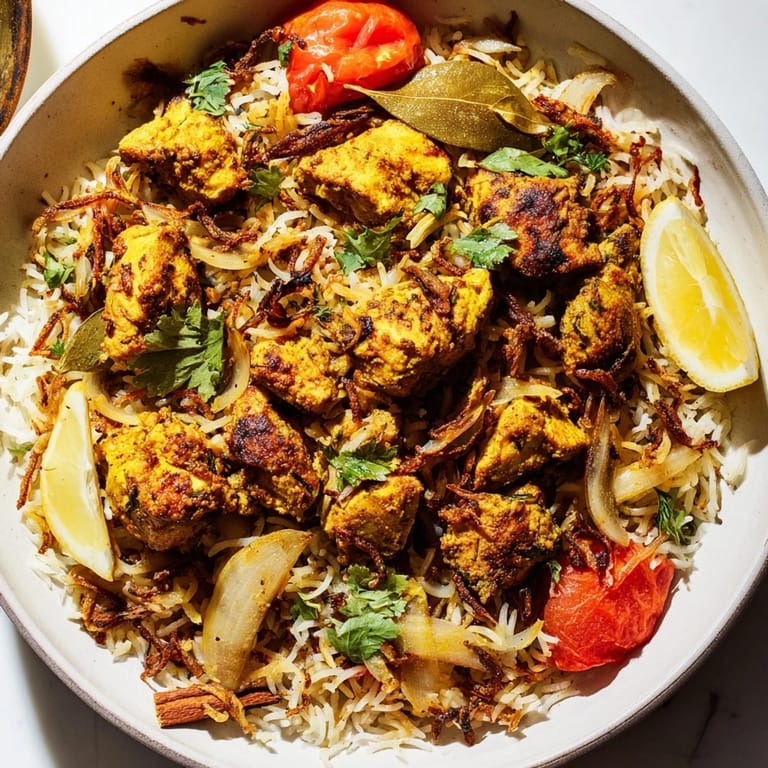
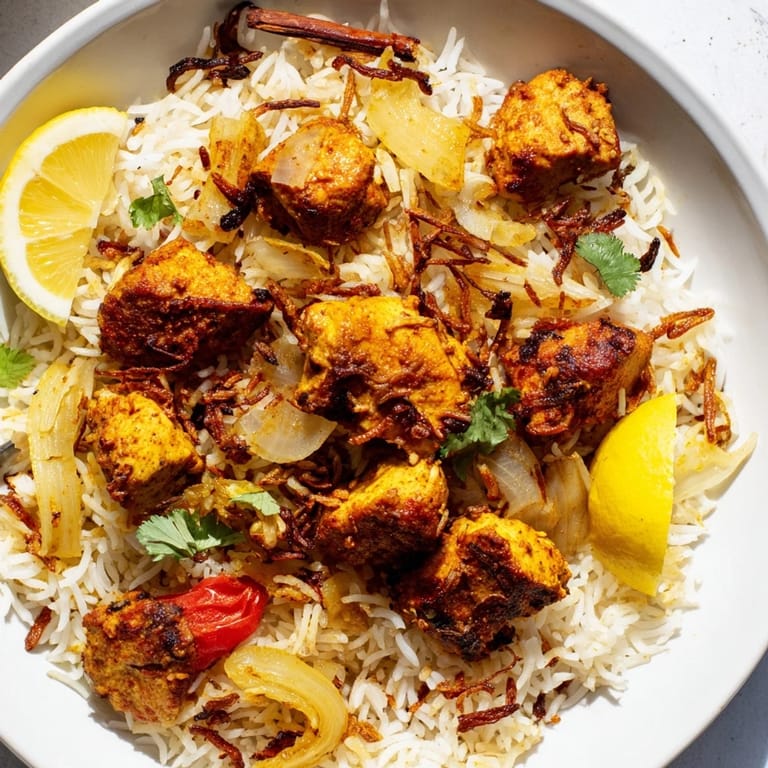
- Scatter fresh cilantro and fried onions over the top, arrange lemon wedges on the side, and serve immediately while the rice is still steaming.
 Pin It
 The first time I served this to my family, my grandmother—who grew up eating traditional biryani in India—took one bite and smiled in a way that said everything. She called it my own interpretation, which was her way of saying I'd made it mine. That moment taught me that food doesn't need to be complicated to be meaningful; it just needs to be made with attention.
Why Basmati Rice Matters Here
Regular white rice will absorb too much water and turn mushy, losing that distinct fluffy texture that makes biryani special. Basmati grains are longer and cook separately from one another, which is why they're worth seeking out for this dish. The first time I made this with whatever rice I had on hand, I ended up with something closer to porridge, and it taught me that the rice variety isn't a small detail—it's central to the whole experience. Rinsing the rice in cold water also removes excess starch, which would otherwise cause the grains to stick together into a clump.
The Secret of Golden Onions
Those caramelized onions at the beginning aren't just a step; they're where most of the depth of flavor comes from. I used to rush this part, stirring occasionally and moving on after a few minutes, but I was cheating myself out of the real magic. When you take the full 6 to 8 minutes to let them turn truly golden—even a little crispy at the edges—they develop a nutty sweetness that becomes the soul of the dish. This is also where patience pays off; high heat will burn them, medium heat lets them slowly transform.
Customizing Without Losing Your Way
This recipe is flexible enough to adjust to what you have on hand, but there are limits to how far you can push it. Swapping chicken thighs for breast meat is possible, but watch it closely because it dries out faster—reduce the cooking time slightly and don't be tempted to extend it. If saffron is within your budget, soak a pinch in warm milk and drizzle it over the rice just before covering to cook; it adds a luxurious floral note that feels like a small gift to yourself. Serve this alongside a cooling cucumber salad or homemade raita to balance the warmth of the spices, especially if you've added the full amount of chili powder.
- Adding saffron soaked in warm milk makes the dish taste like you spent twice as long cooking it.
- A simple cucumber raita on the side cools the spices and makes the whole meal feel more balanced and complete.
- Leftovers reheat beautifully in a covered pot over low heat, and the flavors actually deepen overnight.
 Pin It
 This biryani has become my go-to when I want to impress without stress, or when I just want my home to smell like comfort. Once you make it a few times, it becomes second nature, and you'll find yourself adjusting it with confidence.
Recipe FAQs
- → What type of rice is best for this dish?
Basmati rice is ideal for its fragrant aroma and fluffy texture, which complements the spices and chicken well.
- → Can I use chicken breast instead of thighs?
Yes, chicken breast can be used but be careful not to overcook it to retain its tenderness.
- → How do the whole spices affect the flavor?
Bay leaf, cloves, cardamom, and cinnamon provide a warm, aromatic depth that infuses the dish with classic Indian flavors.
- → Is it necessary to marinate the chicken?
Marinating in yogurt and spices tenderizes the chicken and enhances the overall flavor significantly.
- → Can this dish be made gluten-free?
Yes, all ingredients used are naturally gluten-free, making it suitable for gluten-free diets.
- → What can I serve alongside this dish?
Refreshing sides like raita or a simple cucumber salad balance the warm, spicy flavors perfectly.