 Pin It
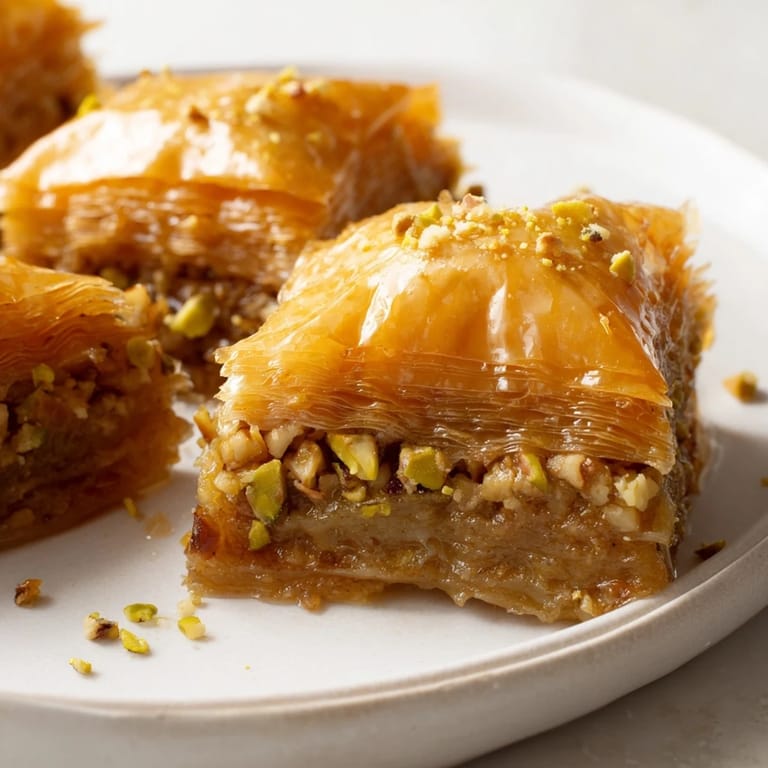
 My first baklava moment came during a rain-soaked afternoon at my neighbor's kitchen in Istanbul, watching her weathered hands work phyllo sheets like thin silk. She moved without hesitation, layering butter and nuts with the kind of practiced rhythm that only comes from decades of repetition. When I asked why she didn't use store-bought syrup, she laughed and said the honey had to be made fresh, still warm when it hit the hot pastry. That lesson stuck with me: baklava isn't just about the ingredients, it's about timing and intention.
I made this for my book club once, slightly nervous about whether it would hold up next to the store-bought options everyone expected. The moment someone bit into a piece and closed their eyes, I knew the homemade versions had won them over. They kept reaching for more pieces, talking with their mouths full about the honey soaking into the pastry. One friend asked for the recipe that same night, texting me weeks later that her family now requests it for every celebration.
Ingredients
- Phyllo dough (16 sheets): Must be thawed at room temperature—cold phyllo tears and cracks, which defeats the whole crispy purpose. Let it sit for an hour before you start, and keep unused sheets under a barely damp towel so they don't dry out.
- Unsalted butter (150 g, melted): The butter carries the flavor and creates those golden, shattering layers. Brush generously between each sheet without pooling it in corners.
- Hazelnuts (100 g, finely chopped): Toasting them lightly before chopping brings out an almost chocolate-like depth that raw hazelnuts can't deliver.
- Pistachios (100 g, finely chopped): Their slight earthiness balances the hazelnut sweetness and adds a subtle color complexity.
- Granulated sugar (100 g for filling): Mix it directly with the nuts to distribute sweetness evenly without pockets of grittiness.
- Ground cinnamon (1 tsp, optional but really not): This isn't decoration—it ties the whole filling together with warmth and spice.
- Water (120 ml): Tempers the honey's intensity and creates a syrup that soaks rather than just coating.
- Honey (150 g): Use the good stuff here; cheap honey tastes thin and one-note once it hits the hot pastry.
- Granulated sugar (100 g for syrup): Keeps the syrup from being cloyingly sweet and helps it penetrate the layers.
- Lemon juice (1 tsp): The secret weapon that brightens everything and prevents the syrup from tasting heavy.
Tired of Takeout? 🥡
Get 10 meals you can make faster than delivery arrives. Seriously.
One email. No spam. Unsubscribe anytime.
Instructions
- Set the stage:
- Preheat your oven to 180°C (350°F) and brush a 20x30 cm baking pan thoroughly with melted butter, paying attention to corners and edges. A well-buttered pan ensures the bottom layer gets as crispy as the top.
- Build the base:
- Lay down 4 phyllo sheets one at a time, brushing each with melted butter before adding the next. You'll feel the stack getting delicate under your hands—that's exactly right.
- Mix your filling:
- Combine the hazelnuts, pistachios, sugar, and cinnamon in a bowl. The mixture should smell warm and toasty; if it smells muted, your nuts might be old.
- Layer one:
- Sprinkle one-third of the nut mixture evenly over your phyllo base, distributing it so no spot is bare.
- Middle layers:
- Add 4 more phyllo sheets with butter between each one, then scatter another third of the nut filling. Repeat this pattern once more so you've got three distinct nut layers.
- The crown:
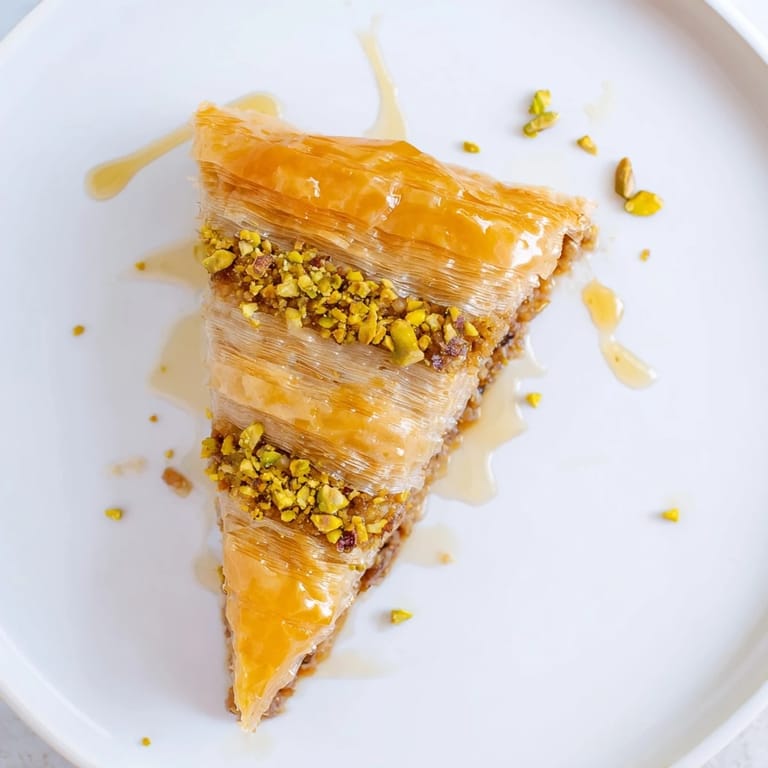
- Top everything with the final 4 phyllo sheets, buttering each one including the very top layer. This is what turns golden and shatters when people bite into it.
- Cut with intention:
- Using a sharp knife, score the pastry into diamonds or squares before baking. Don't press hard—a gentle sawing motion prevents the filling from shifting.
- Into the oven:
- Bake for 35–40 minutes until the top is deep golden and the pastry sounds crisp when you tap it lightly. The edges will smell almost nutty and caramelized.
- Make the syrup:
- While the baklava bakes, combine water, honey, sugar, and lemon juice in a saucepan. Bring it to a boil, then reduce heat and let it simmer for 10 minutes—this concentrates the flavor and lets the lemon shine through.
- The critical moment:
- The instant the baklava comes out of the oven, pour the hot syrup evenly over the hot pastry. The heat is essential; it makes the syrup sink into every crevice instead of sitting on top.
- Patience pays:
- Let it cool completely at room temperature. This takes a few hours, but it's when the magic happens—the pastry firms up, the syrup sets, and everything melds.
 Pin It
 There's a particular kind of pride that comes from serving something this elegant that you made yourself—especially when someone asks if you bought it and you get to say no. My mother kept one piece in a container for three days after I made this, saying she wanted to enjoy it slowly. When I finally found her eating it with coffee early one morning, she admitted she'd been looking forward to that moment all week.
Why Temperature Control Changes Everything
The difference between a mediocre baklava and an unforgettable one lives in respecting temperature at every stage. The oven needs to be exactly 180°C so the phyllo crisps evenly without the nuts browning too fast. The syrup must be simmering, not just warm, when it meets the hot pastry. And the baklava itself needs to be fresh from the oven, still radiating heat. I learned this the hard way after making a batch where I let the syrup cool slightly while I chatted with a friend—the result was soggy and dense. Now I time everything to converge at that one perfect moment.
Choosing and Preparing Your Nuts
Most people underestimate how much the quality of nuts matters in a recipe like this. Stale hazelnuts taste woody and bitter, while fresh ones taste almost buttery. If you can, buy whole nuts and chop them yourself rather than using pre-chopped ones, which oxidize quickly and lose their delicate oils. I started toasting my nuts lightly before chopping them after I realized how much deeper the flavor became. It's an extra five minutes that transforms the entire dish from pleasant to memorable.
Beyond the Basic Recipe
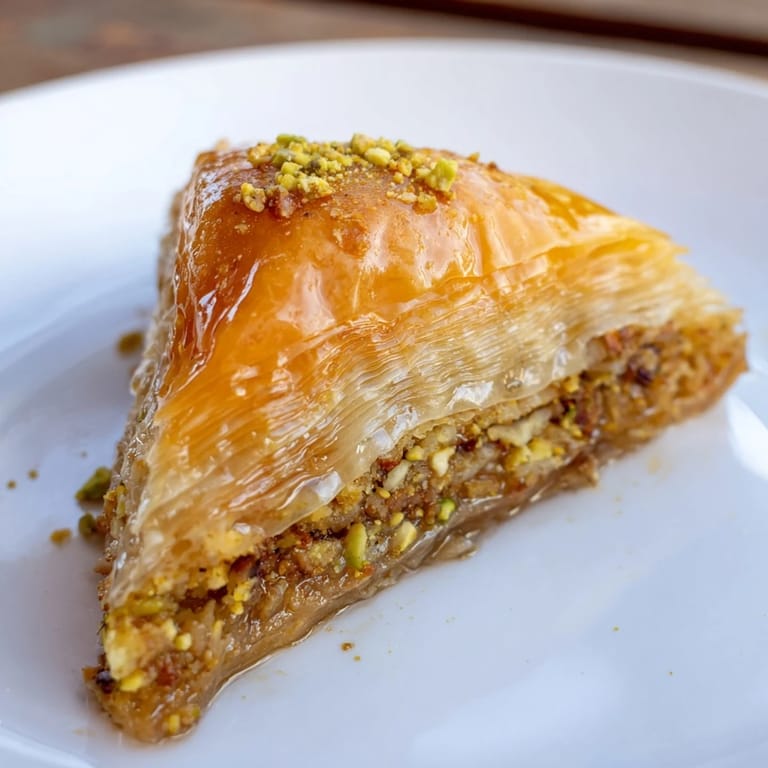
Once you've made this version a few times and feel confident with it, the baklava opens up to experimentation. I've swapped hazelnuts for almonds when hazelnuts weren't available, and the result was equally delicious if slightly less rich. Some people add a touch of rose water or orange zest to the syrup for brightness. The structure stays the same; you're just playing with flavor notes.
- If you want less sweetness, reduce the sugar in the syrup by 20 g and add an extra teaspoon of lemon juice.
- Store baklava in an airtight container at room temperature for up to five days—it actually improves slightly as the syrup continues to distribute.
- Bringing it to a gathering? Pack it in a sturdy container and let people discover the crispy-soft contrast themselves.
 Pin It
 Baklava is one of those recipes that rewards patience and attention without demanding technical skill. Make it once, and you'll understand why it's been treasured across generations and countries.
Recipe FAQs
- → What nuts are used in this baklava?
It combines finely chopped hazelnuts and pistachios for a rich and aromatic filling.
- → How is the phyllo dough prepared before baking?
Each sheet is brushed generously with melted unsalted butter to achieve a crisp, golden texture when baked.
- → What flavors complement the nut filling?
A touch of ground cinnamon optionally enhances the nut mixture, adding warmth to the overall taste.
- → How is the honey syrup made?
Honey is simmered with water, sugar, and lemon juice until slightly thickened, providing a sweet and tangy finish.
- → When should the honey syrup be poured over the pastry?
The syrup is poured immediately after baking while the pastry is still hot to help it soak deeply into the layers.
- → Any tips for easier slicing?
Chilling the pastry before cutting helps achieve clean slices and maintains its shape.