 Pin It
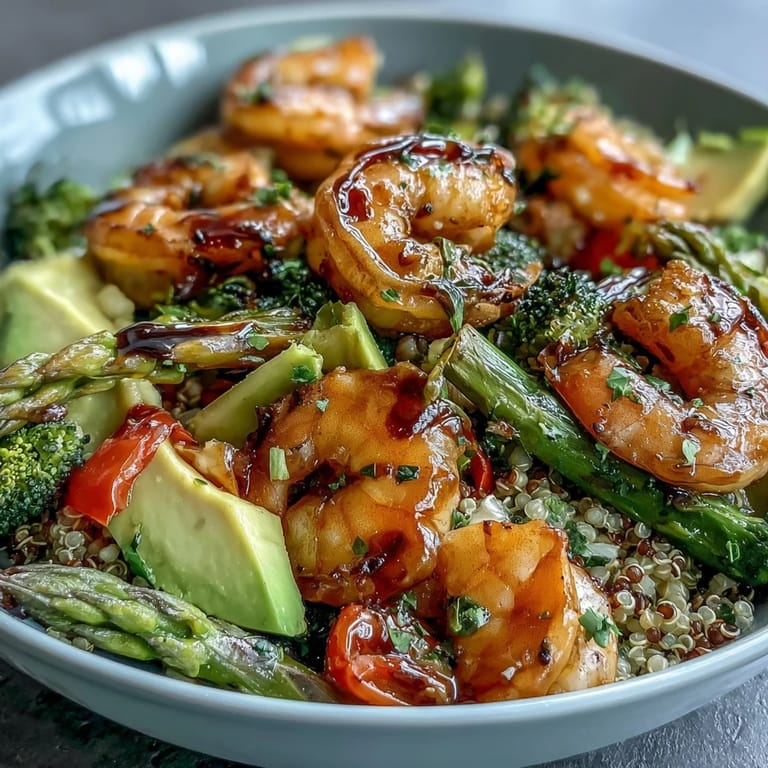
 There's something about arranging vegetables in a bowl that makes you feel like you're actually taking care of yourself, even on the busiest Tuesday afternoon. I discovered this rainbow bowl on a whim, when my kitchen had the usual suspects scattered around and I wanted something that felt indulgent without the heaviness. The shrimp cooked in under five minutes, the vegetables practically arranged themselves, and suddenly I was holding a plate that looked like it belonged in a glossy magazine—except I'd made it, mostly by accident, in my small apartment.
I made this for a friend who'd just started trying to eat healthier, and watching her face light up when she realized she actually enjoyed quinoa and shrimp together was the kind of small kitchen victory that stays with you. She went quiet for a moment, then asked for the recipe—not to be polite, but because she genuinely wanted to make it again. That's when I knew the bowl had become more than just colorful vegetables thrown together.
Ingredients
- Large shrimp (200 g): Look for ones that feel firm and smell like the ocean, not fishy; they'll cook in seconds once they hit the heat, so don't walk away from the skillet.
- Olive oil: Use your good stuff for the dressing where you'll actually taste it, and save the regular kind for cooking the shrimp.
- Cooked quinoa (150 g): Make it a day ahead if you want; it keeps beautifully and gives you one less thing to do when you're hungry.
- Broccoli florets (100 g): Cut them roughly the same size so they blanch evenly and stay that gorgeous bright green.
- Asparagus (100 g): Trim the woody ends by bending them until they snap naturally; your hands know exactly where to break them.
- Red cabbage (100 g): Slice it thin and it becomes sweet and tender; thick slices stay too crunchy and bitter.
- Tomato (1 medium): A ripe one makes all the difference; an under-ripe tomato will taste like water and sadness.
- Avocado (1 ripe): Wait until it yields slightly to gentle pressure, then slice it right before assembly so it doesn't brown or turn mushy.
- Balsamic vinegar: The aged kind has a sweetness that balances everything; cheap versions taste sharp and one-dimensional.
- Dijon mustard (1/2 tsp): This tiny amount emulsifies the dressing and adds a subtle kick without shouting over the vegetables.
Tired of Takeout? 🥡
Get 10 meals you can make faster than delivery arrives. Seriously.
One email. No spam. Unsubscribe anytime.
Instructions
- Blanch the greens:
- Boil salted water like you're making pasta, then drop in the broccoli and asparagus for just 2–3 minutes until they turn that brilliant green and lose their raw crunch. Drain immediately and shock them in ice water so they stop cooking and stay crisp.
- Sear the shrimp:
- Get your skillet hot with olive oil, season the shrimp generously, then let them sit undisturbed for a minute before flipping—they'll turn pink and curl up like tiny crescent moons. Two minutes per side and they're done; overcooked shrimp becomes rubbery and sad.
- Whisk the dressing:
- Combine balsamic vinegar, olive oil, mustard, salt, and pepper in a small bowl and whisk until it looks unified and slightly glossy. Taste it on your finger and adjust the salt—this is where the entire bowl gets its personality.
- Assemble with intention:
- Divide the quinoa between two bowls as your base, then arrange each component in its own section like you're painting with vegetables. This isn't just for looks; it keeps flavors distinct until you take that first mixed bite.
- Dress and serve:
- Drizzle the balsamic dressing over everything just before eating so the vegetables stay crisp and the avocado doesn't get soggy. Serve right away while the shrimp is still warm and the quinoa retains its texture.
 Pin It
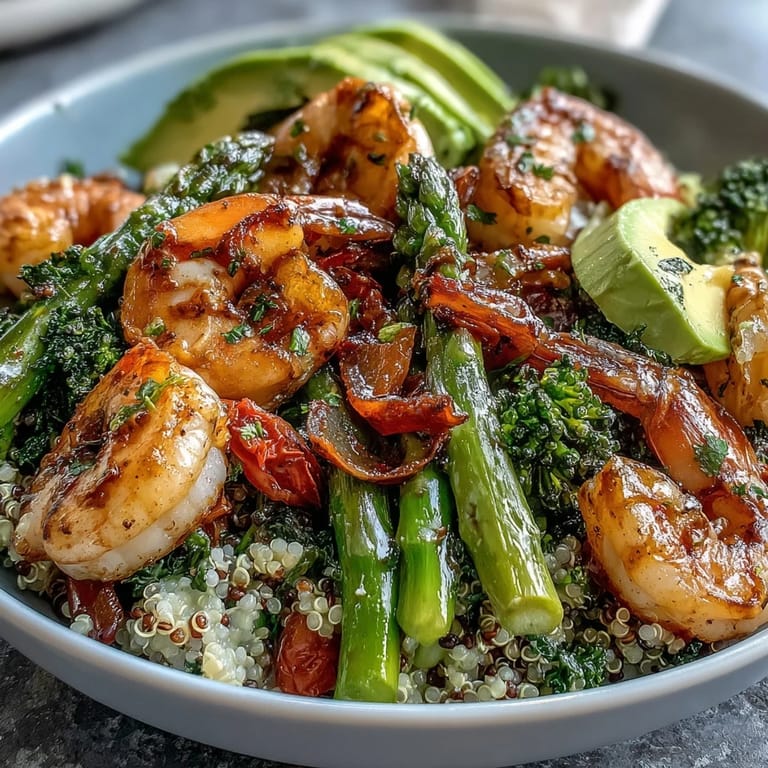
 There was a moment last spring when I packed this bowl into a glass container and took it to work, and the overhead lights hit it just right through my office window—the red cabbage glowing like stained glass, the shrimp catching light, the green so alive it almost looked artificial. A colleague walked past, stopped, and asked what that was, and I realized the bowl had somehow become beautiful on purpose.
The Rainbow Effect
Eating in color isn't just a trendy Instagram thing; it's actually how you ensure you're getting different nutrients and antioxidants from different vegetables. When you see a plate divided into red, green, orange, and purple, your brain registers abundance and excitement before you even take a bite. I started paying attention to this after reading something about how our eyes taste first, and it genuinely changed how I plate things.
Why Cold-Start Vegetables Work Here
The blanched-then-chilled broccoli and asparagus create a textural contrast that warm-served vegetables never could; they stay snappy and almost sweet instead of becoming soft and muted. The cold also keeps the entire bowl refreshing instead of heavy, which is especially true on days when the last thing you want is warm food. This is why the bowl works as well in July as it does in January.
Making It Your Own
The beauty of this bowl is how easily it adapts to what you have or what you're craving that day. I've made it with roasted chickpeas when I skipped the shrimp, thrown in leftover roasted sweet potato, and even used lime juice instead of balsamic when I was feeling citrus. The structure stays the same, but the flavors shift, which means you never get bored eating it twice a week.
- Toast some pumpkin seeds or nuts and scatter them over the top for crunch that actually lasts through the bowl.
- Swap any vegetable for something seasonal; spring peas, summer corn, roasted root vegetables in fall—the formula doesn't break.
- Make a double batch of dressing and keep it in a small jar so you can shake it back together when you reach for it later in the week.
 Pin It
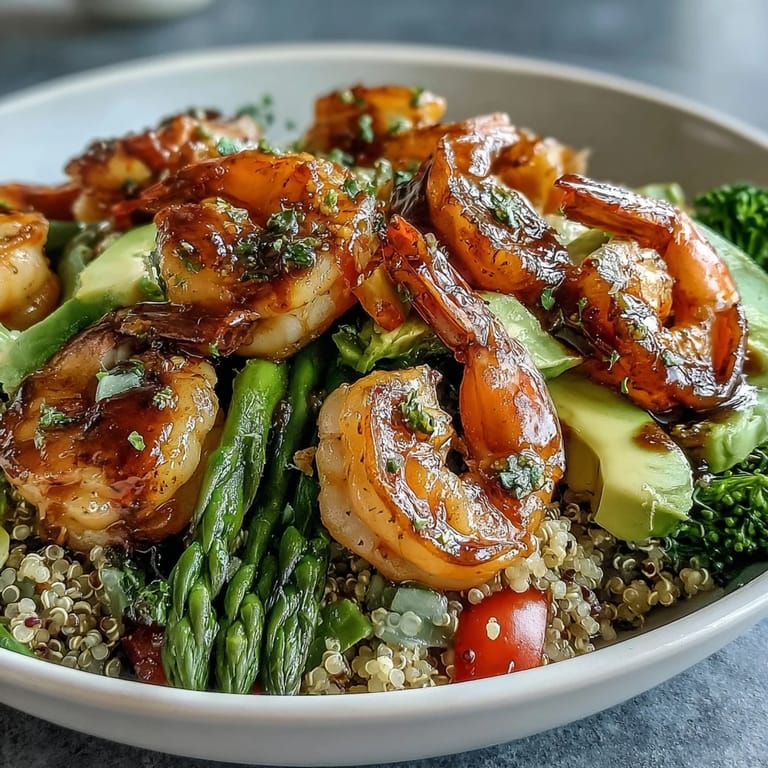
 This bowl became my answer to the constant question of what to eat when you're trying to take care of yourself but don't want to feel deprived. It's become the thing I make when someone visits and I want them to leave thinking I'm someone who eats well.
Recipe FAQs
- → Can I make this bowl ahead of time?
Yes, you can prepare the components in advance. Cook the quinoa, Blanch the vegetables, and store them separately in the refrigerator. Assemble the bowls just before serving and dress right before eating to keep everything fresh and crisp.
- → What protein alternatives work well?
For a plant-based version, try roasted chickpeas, marinated tofu, or grilled tempeh. Grilled chicken breast, pan-seared salmon, or even poached eggs would also complement the vegetables beautifully if you eat other proteins.
- → How do I properly Blanch the vegetables?
Bring salted water to a rolling boil, add the broccoli and asparagus, and cook for 2-3 minutes until they're bright green but still have a slight crunch. Immediately transfer to ice water or rinse under cold water to stop the cooking process and preserve color.
- → Can I use different vegetables?
Absolutely. This bowl is very versatile. Try bell peppers, shredded carrots, cucumber, radishes, zucchini, or any seasonal vegetables you enjoy. The key is maintaining a variety of colors and textures for visual appeal and nutritional diversity.
- → How long does the balsamic dressing last?
The dressing will keep in an airtight container in the refrigerator for up to one week. Give it a good whisk or shake before using, as the ingredients may separate slightly when chilled. You can also double the batch to have it ready for quick meals throughout the week.
- → Is quinoa necessary for this bowl?
Not at all. You can substitute brown rice, farro, couscous, or even cauliflower rice for a lower-carb option. The quinoa adds protein and a fluffy texture, but any grain that complements the vegetables will work wonderfully.