 Pin It
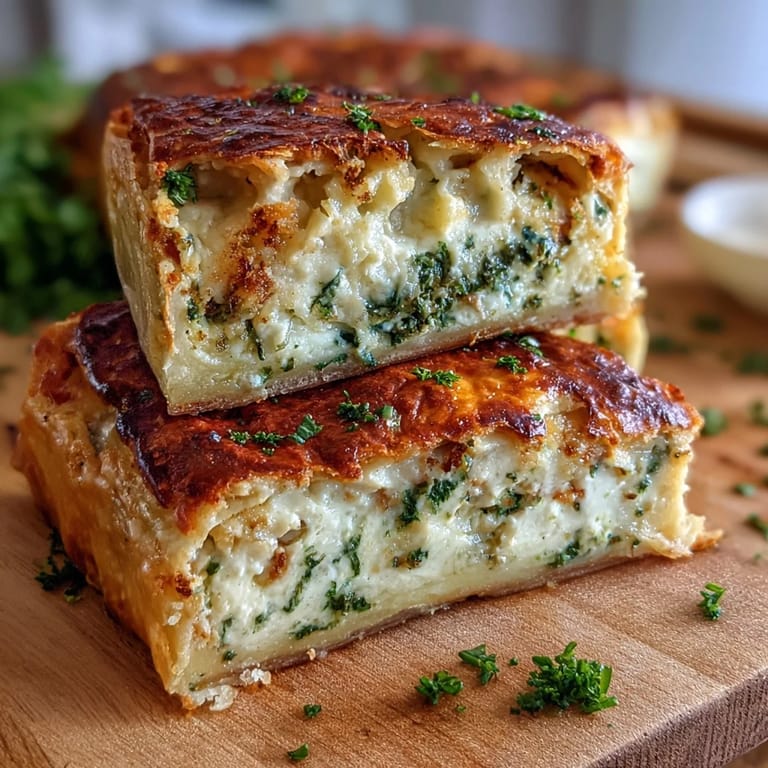
 My sister called me three days before Easter, panicked because she'd volunteered to bring the main dish and suddenly realized she had no idea what to make. I was chopping vegetables in my kitchen when she described what she envisioned—something that looked fancy when you sliced into it, something that would make people pause and actually notice it on the table. Within minutes, I was describing this pie to her, remembering how my nonno used to hide whole eggs in his savory pies like little treasures. She showed up at the family dinner with this golden, puffed pastry masterpiece, and when she cut into it, the hard-boiled eggs revealed themselves in perfect cross-sections. Everyone leaned in closer, genuinely impressed before they'd even tasted it.
I watched my eight-year-old nephew study the pie before we carved into it, suspicious about what was inside that golden pastry. The moment I made the first cut and those creamy layers with the perfect egg circles appeared, his eyes went wide—he actually asked for seconds, which never happens with vegetables involved. That's when I realized this dish does something special beyond just tasting good; it transforms ordinary ingredients into something that feels like you've planned something remarkable.
Ingredients
- Puff pastry (2 sheets, about 500 g total): Buy the good stuff that feels buttery in your hands; it makes a real difference in how crispy and golden it gets.
- Ricotta cheese (250 g): This is your creamy base—it's forgiving and holds everything together without being heavy.
- Cooked ham (150 g, diced): Slice it thick enough that you get actual texture; paper-thin ham disappears into the filling.
- Baby spinach (100 g, wilted and chopped): Wilt it first and really squeeze out the moisture, otherwise your filling gets watery and the pastry won't crisp properly.
- Parmesan cheese (80 g, grated): Fresh grated always beats pre-grated; the flavor is brighter and it melts more evenly.
- Eggs (3 large, for filling): These bind everything and add richness to the ricotta mixture.
- Ground nutmeg (1/2 tsp): Just a whisper of this transforms the whole filling from good to sophisticated.
- Black pepper and salt (1/2 tsp each): Taste as you go; the ham is already salty, so you might need less than you think.
- Olive oil (1 tbsp): This keeps the texture creamy and adds a subtle richness.
- Hard-boiled eggs (4 large, peeled): These are your showstoppers; boil them the day before so you're not rushing on cooking day.
- Egg wash (1 egg yolk whisked with 1 tbsp milk): This is what turns the pastry that gorgeous burnished gold that makes people think you're a proper cook.
Tired of Takeout? 🥡
Get 10 meals you can make faster than delivery arrives. Seriously.
One email. No spam. Unsubscribe anytime.
Instructions
- Set up your stage:
- Preheat your oven to 190°C and grease your pan while you work. Line it with your first sheet of pastry, letting some hang over the edges—you'll trim it later and won't regret the extra cushion.
- Build your base:
- Mix your ricotta, ham, spinach, Parmesan, eggs, and seasonings together in a big bowl until everything is evenly combined and creamy. Taste it and adjust—this is the moment to get it right because you won't get another chance.
- Layer the magic:
- Spread half the ricotta mixture across your pastry base, smoothing it into an even layer. Make four shallow grooves along the middle, then nestle your hard-boiled eggs into those grooves like you're tucking them in gently.
- Seal the filling:
- Cover the eggs with the remaining ricotta mixture, smoothing everything so it's level. Lay your second pastry sheet over the top, press the edges to seal, trim the excess, and crimp decoratively with a fork if you're feeling fancy.
- The golden finish:
- Whisk your egg yolk and milk together and brush it across the top pastry like you're painting—this gives you that beautiful color. Cut three or four small slits to let steam escape, which prevents sogginess.
- Bake until golden:
- Slide it into the oven for 40 to 45 minutes until the pastry is puffed and deep golden brown. Let it cool for at least 20 minutes before slicing so the filling sets and doesn't spill everywhere.
 Pin It
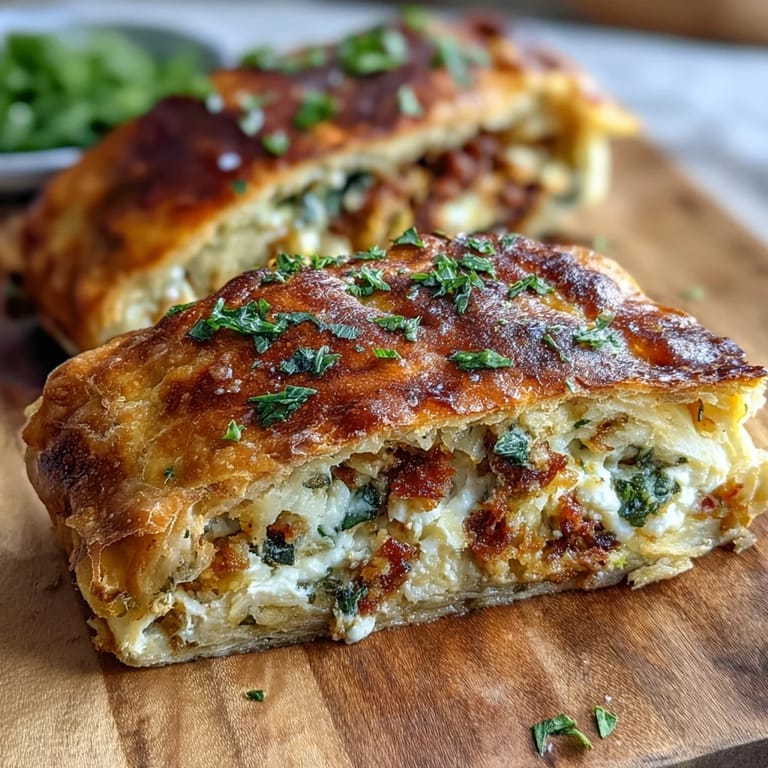
 My mother took a photo of that first slice before she ate it, something she never does. Later she told me it reminded her of my grandmother's kitchen on holiday mornings, when there was always something unexpected happening in the oven. That's when I understood that some dishes aren't just food—they're permission to slow down and notice the people around you.
Why This Works for Spring Celebrations
There's something about serving a pie filled with eggs that feels perfectly timed for Easter and spring gatherings—it's traditional without being fussy, and it feels like you've put real thought into what lands on the table. The pastry stays flaky even if you make it hours ahead, and the filling is forgiving enough that you can adjust seasonings and substitutions without worrying you'll ruin everything. I've made this on days when the weather was finally warm enough to open all the windows, and there's something about serving something warm and substantial while a breeze is coming through that makes people actually connect over dinner.
Substitutions and Variations That Actually Work
Swap the spinach for Swiss chard or kale if that's what you have; they'll give you a slightly different flavor but the texture works the same way. Fresh herbs like parsley, basil, or chives scattered through the filling add brightness that makes the whole thing feel less heavy. I've even tried adding a handful of sautéed mushrooms, and they disappear into the creamy filling while adding an earthy depth that surprised everyone. The beauty of this pie is that it's robust enough to accommodate what you've actually got in your kitchen rather than requiring a special trip to the store.
How to Serve It and What Comes Next
A simple green salad with lemon vinaigrette alongside this pie is all you need—it cuts through the richness and balances the plate perfectly. The pie is equally beautiful served warm from the oven or at room temperature hours later, which means you can bake it in the morning and relax until dinner time. I've found that making it a day ahead and reheating it gently actually lets all the flavors settle and deepen, so don't stress if your timeline gets tight. Pair it with a light white wine or even sparkling water with fresh lemon, and you've got a meal that feels like you planned something special without actually stressing yourself out.
- Cut it with a sharp, thin-bladed knife dipped in hot water between slices so the pastry doesn't shatter.
- Leftover slices keep beautifully for three days and are honestly better than leftovers have any right to be.
- If you're bringing this to a potluck, transport it in the pan and slice it there so it looks its absolute best.
 Pin It
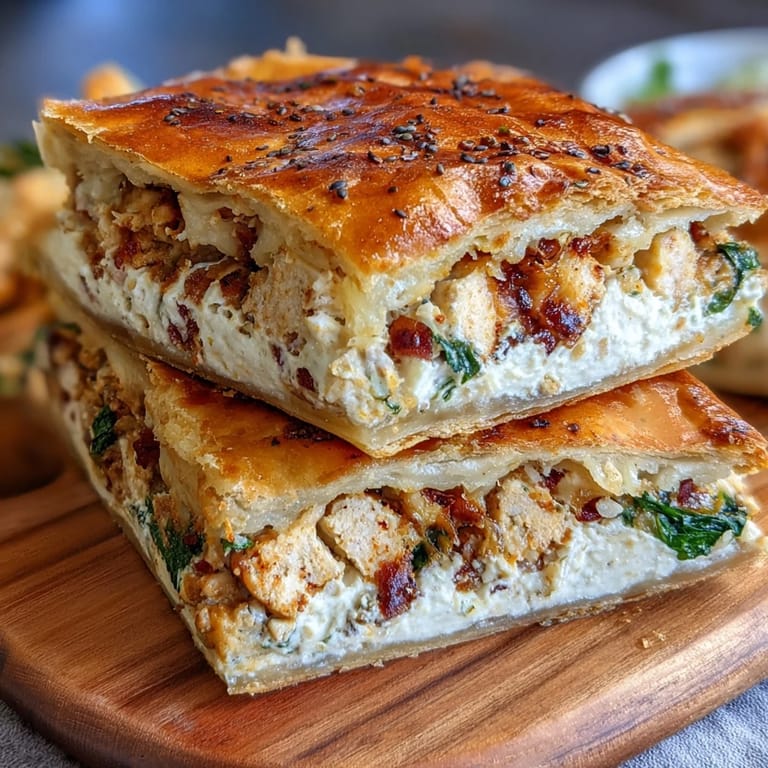
 This pie became a permanent fixture at our family celebrations because it does something most recipes don't—it makes people feel genuinely glad to be sitting at the table together. Make it once, and you'll find yourself thinking about it weeks later.
Recipe FAQs
- → What type of pastry is used for the pie?
Flaky puff pastry sheets are used to create the crisp and golden crust.
- → Can I substitute the spinach with other greens?
Yes, Swiss chard or kale can be used in place of spinach for a similar texture and flavor.
- → How are the hard-boiled eggs incorporated?
Whole hard-boiled eggs are gently nestled horizontally into grooves made in the filling before covering with the remaining mixture.
- → What seasoning complements the filling?
Ground nutmeg, black pepper, and salt subtly enhance the savory flavors without overpowering the pie.
- → How should the pie be served?
It can be served warm or at room temperature, ideally paired with a fresh green salad for a complete meal.
- → Can fresh herbs be added to the filling?
Adding fresh parsley or basil can introduce an extra layer of flavor to the filling.