 Pin It
 My grandmother used to make this soup on the first cold snap of autumn, when the kitchen would fill with smoke from the bacon and the windows would steam up from the simmering broth. She never measured anything precisely, just moved by instinct and the way the peas softened into creamy submission. Years later, I realized that soup was her way of saying the season had changed, and it was time to slow down. Now whenever I make it, I'm transported to that cluttered kitchen with its worn wooden spoon and the radio playing softly in the background.
I made this for my neighbor last winter after she'd had surgery, and she told me it was the first meal that actually tasted like real food again, not something from a get-well care package. There's something about a warm bowl of this soup that feels like permission to rest, to let someone take care of you for a moment. She asked for the recipe three times before I finally wrote it down, which tells you something about how it lands with people.
Ingredients
- Smoked bacon, diced (8 oz): The rendered fat becomes your soup's backbone, infusing everything with a gentle smokiness that you can't replicate any other way.
- Dried black-eyed peas, soaked overnight and drained (2 cups), or canned (3 cans): Soaked dried peas have a better texture and deeper flavor, but canned saves time on busy nights without sacrificing much.
- Yellow onion, finely chopped (1 medium): This creates the aromatic base that softens and sweetens as it cooks in the bacon fat.
- Carrots, diced (2 medium): They add a subtle sweetness and color, breaking down slightly to thicken the broth naturally.
- Celery stalks, diced (2): Often overlooked, celery is the quiet partner that brings depth and helps round out the flavor profile.
- Garlic, minced (3 cloves): Added after the softer vegetables, it stays bright and doesn't become harsh or bitter.
- Low-sodium chicken broth (6 cups): This lets the other ingredients shine without overwhelming salt, and you can always adjust at the end.
- Bay leaf (1): Drop it in whole, let it steep, then fish it out before serving, treating it like a tea bag for your broth.
- Dried thyme (1/2 tsp): A whisper of earthiness that feels right alongside the smokiness of the bacon.
- Smoked paprika (1/2 tsp): This is what gives the soup its subtle warmth and visual appeal without being spicy.
- Freshly ground black pepper (1/4 tsp): Grind it just before using, and you'll taste the difference in the final bowl.
- Salt, to taste: Hold back initially because the bacon and broth already contribute saltiness, then adjust once everything is cooked.
- Fresh parsley, chopped (2 tbsp optional): A bright finish that cuts through the richness and makes the bowl look intentional.
Tired of Takeout? 🥡
Get 10 meals you can make faster than delivery arrives. Seriously.
One email. No spam. Unsubscribe anytime.
Instructions
- Crisp up that bacon first:
- Set your pot over medium heat and let the bacon pieces render slowly, about 6 to 8 minutes, until they're golden and the fat is pooling around them. You'll hear the gentle sizzle, and the kitchen will suddenly smell like breakfast and promise, which means you're on the right track.
- Build your aromatic base:
- Once the bacon is crisp, scoop it out with a slotted spoon and set it aside on a paper towel, leaving that precious bacon fat behind. Add your onion, carrots, and celery to the pot and let them soften for about 5 to 6 minutes, stirring occasionally so they color lightly but don't brown.
- Wake up the garlic:
- Stir in your minced garlic and cook for just one minute until the smell becomes almost perfumy and inviting. This step matters because undercooked garlic tastes harsh, but even 60 seconds of heat mellows it into something sweet.
- Gather everything in the pot:
- Add your drained black-eyed peas, chicken broth, bay leaf, thyme, smoked paprika, and black pepper all at once, stirring gently to combine. Bring it to a boil, and watch as the broth darkens slightly from the paprika.
- Let it simmer low and slow:
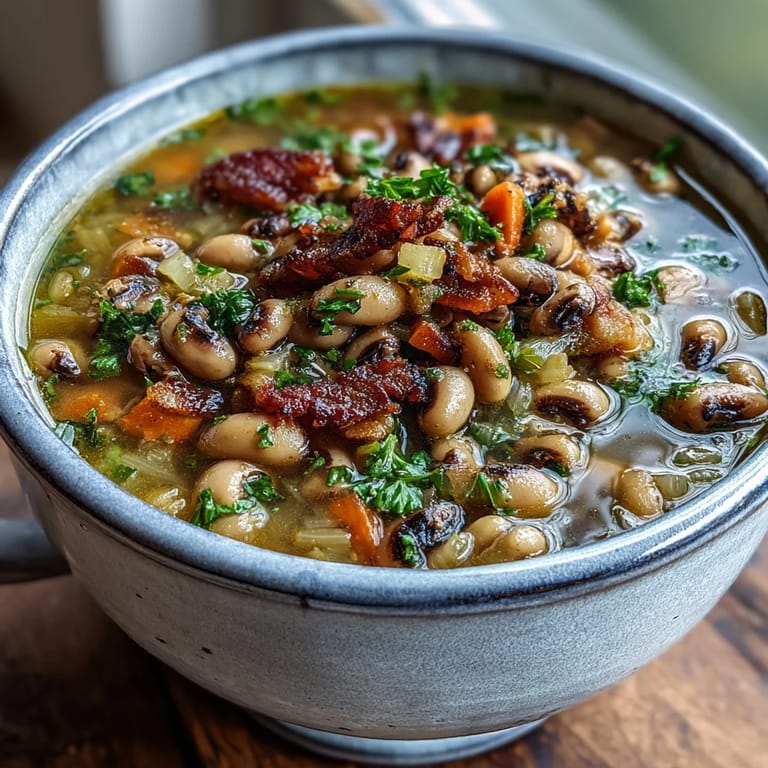
- Reduce the heat to low, cover the pot, and let it bubble quietly for 30 to 35 minutes if you used soaked dried peas, or 20 minutes if you went the convenience route with canned. The peas will soften, the flavors will deepen, and the broth will become silky from the starch releasing from the peas.
- Season and serve:
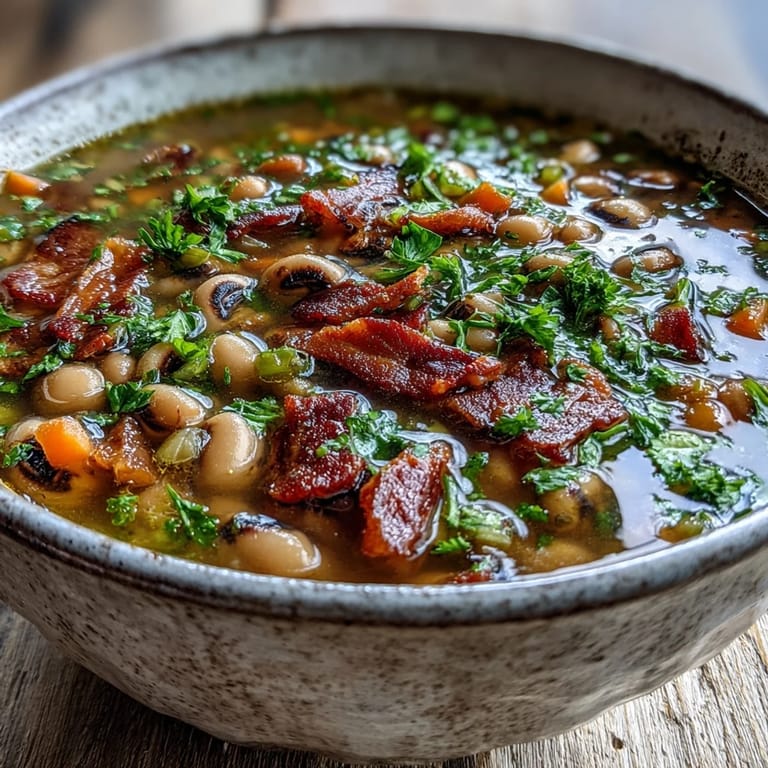
- Fish out the bay leaf with a spoon, then taste the soup and add salt until it sings. Ladle it into bowls and scatter that reserved bacon on top, maybe some fresh parsley if you have it, and serve while it's still steaming.
 Pin It
 There's a moment about halfway through the simmering when the soup shifts from being a collection of ingredients to becoming something whole and greater than the sum of its parts. That's when I usually stop stirring and just let it be, knowing that patience is doing the work now instead of my spoon.
About the Peas
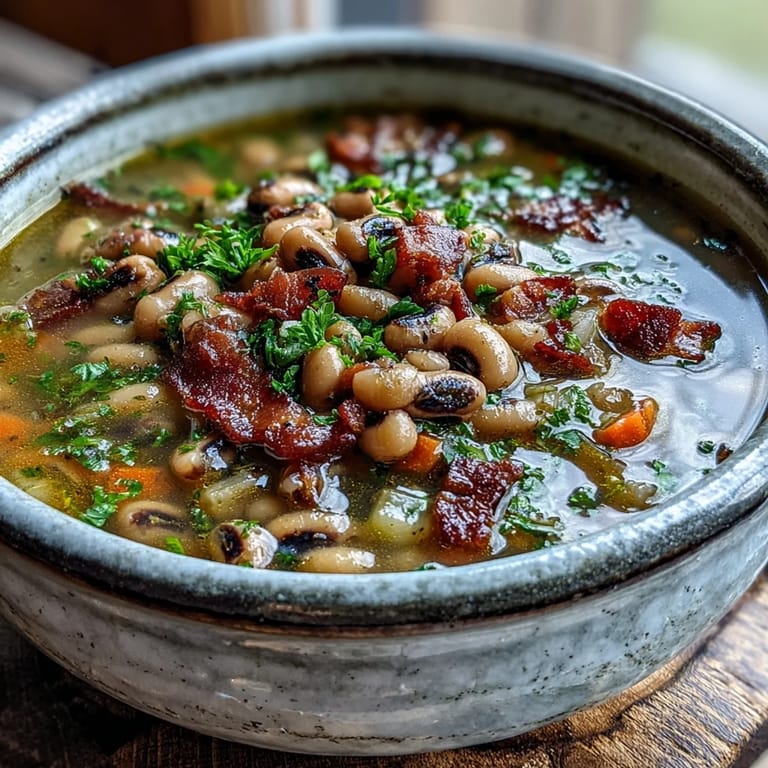
Black-eyed peas have a creamy texture when cooked properly, which is nothing like their dried, hard appearance in the bag. They're traditional in Southern cooking for a reason, stubbornly flavorful and never mushy if you don't overcook them. The skin stays intact while the inside becomes soft, creating a texture that works beautifully in soup.
The Bacon Fat Advantage
Using the rendered bacon fat instead of discarding it is where this recipe gets its soul, honestly. It's not just flavor, it's an entire category of delicious that you simply cannot get from starting with cold oil. The fat also helps your vegetables caramelize slightly without needing high heat, which means they stay tender instead of tough.
Variations and Serving Ideas
Once you've made this soup a few times, you'll start seeing all the ways to play with it based on what you have and what you're craving. It's adaptable enough to feel like a blank canvas while still being satisfying enough to stand on its own. The beauty is that each version tastes like the first one, just with your own fingerprints on it.
- For a vegetarian take, simply leave out the bacon and swap in vegetable broth, then add a small splash of liquid smoke to keep that depth of flavor.
- Stir in chopped collard greens or kale during the last 10 minutes if you want to add nutrition and a bit of earthiness without disrupting the existing balance.
- Serve it with cornbread or a chunk of crusty bread, letting the bread soak up the broth until it's almost part of the soup itself.
 Pin It
 This soup gets better if you make it a day ahead and let it rest in the refrigerator, the flavors settling and deepening overnight. There's something generous about making a big pot of this, knowing it will warm you up more than once.
Recipe FAQs
- → Can I use canned black-eyed peas instead of dried?
Yes, substitute 3 cans (15 oz each) of rinsed and drained black-eyed peas. Reduce simmering time to 20 minutes since canned peas are already tender.
- → How do I make this vegetarian?
Omit the bacon and use vegetable broth instead of chicken broth. Add a dash of liquid smoke to maintain the smoky flavor profile that bacon typically provides.
- → Can I freeze this soup?
This soup freezes well for up to 3 months. Cool completely before transferring to airtight containers. Thaw overnight in the refrigerator and reheat gently on the stovetop.
- → What should I serve with this soup?
Cornbread or crusty bread are traditional accompaniments. The bread helps soak up the flavorful broth. A simple green salad also makes a nice side to complete the meal.
- → Do I need to soak the black-eyed peas overnight?
If using dried black-eyed peas, overnight soaking is recommended for even cooking and better texture. However, you can use the quick-soak method by boiling them for 2 minutes, then letting them stand for 1 hour before cooking.
- → Can I add other vegetables to this soup?
Absolutely. Chopped collard greens or kale can be added during the last 10 minutes of simmering. Diced tomatoes or bell peppers also complement the flavors well.